
Switch 2 vs Switch OLED: Full Comparison (2026)
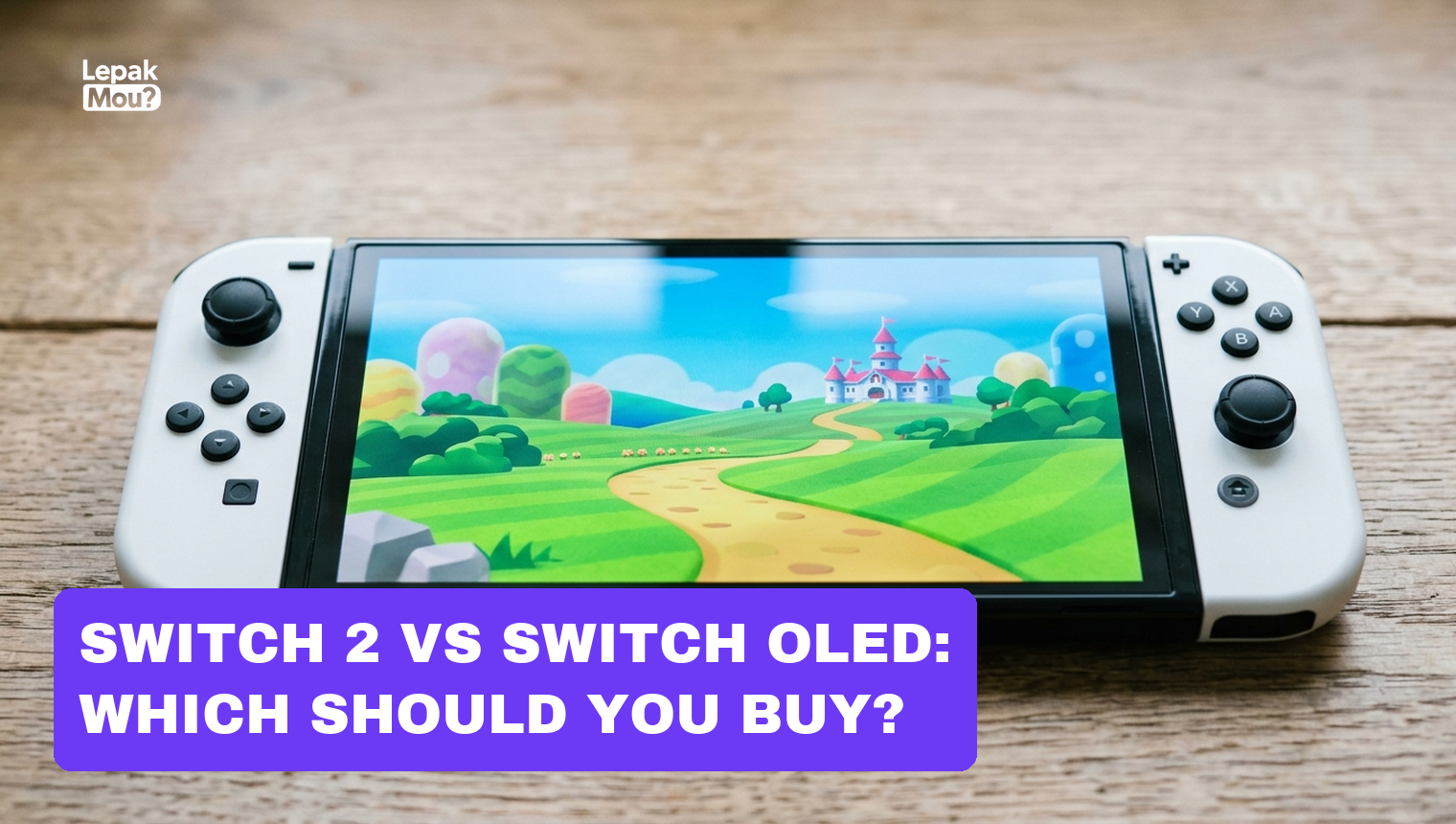
Short answer first, because you probably just want to know: if you want the most powerful Nintendo handheld and you plan to play new releases for the next few years, get the Switch 2. If you’re on a tighter budget, love a gorgeous vibrant screen, and mostly play the existing library, the Switch OLED still wins on value in 2026. That’s the honest verdict.
This guide breaks down the Switch 2 vs Switch OLED battle across screen, specs, performance, battery, backwards compatibility, and price in Malaysia (real RM figures, not just USD). We even throw in how the Switch 2 stacks up against the Steam Deck OLED for the PC crowd. No fluff, just a clear recommendation by the end.
Switch 2 vs Switch OLED at a Glance (Comparison Table)
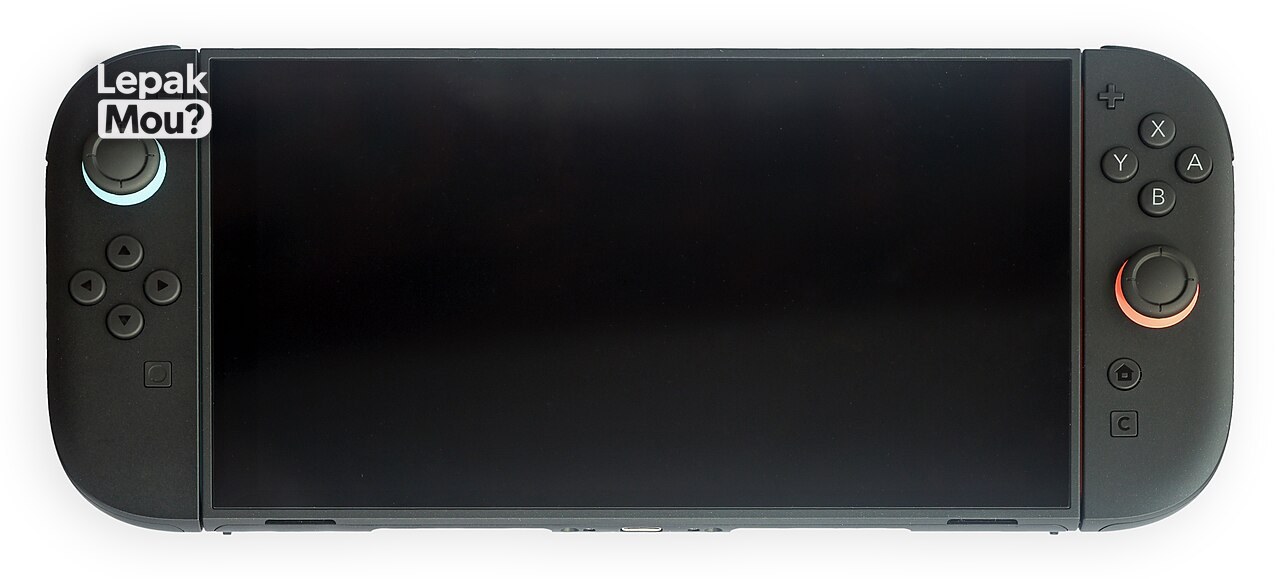
Here’s the full side-by-side. Scan this first, then read the sections below for what actually matters in real gameplay.
| Spec | Nintendo Switch 2 | Nintendo Switch OLED |
|---|---|---|
| Screen size | 7.9-inch | 7-inch |
| Screen type | LCD, HDR, up to 120Hz VRR | OLED, 60Hz |
| Handheld resolution | Up to 1080p | 720p |
| Docked output | Up to 4K at 60fps (or 1440p/120Hz) | Up to 1080p |
| Chipset | Custom Nvidia processor with DLSS | Nvidia Tegra X1 (2015-era) |
| RAM | 12GB | 4GB |
| Internal storage | 256GB (UFS) | 64GB |
| Expandable storage | microSD Express only | Standard microSD |
| Battery (handheld) | Roughly 2 to 6.5 hours | Roughly 4.5 to 9 hours |
| Weight (with Joy-Con) | Around 534g | Around 420g |
| Controllers | Magnetic Joy-Con 2 | Rail-slide Joy-Con |
| Launch price (US) | USD 449.99 | USD 349.99 |
| Malaysia price (est.) | Around RM2,199 | Around RM1,199 to RM1,299 |
The three biggest differences in one breath: the Switch 2 has a bigger LCD while the OLED keeps its smaller but punchier OLED panel, the Switch 2 pushes 4K when docked, and it’s simply on another level for raw performance. Specs verified against the official Nintendo product pages. Now let’s unpack what each one means for you.
Display: LCD vs OLED Screen Compared
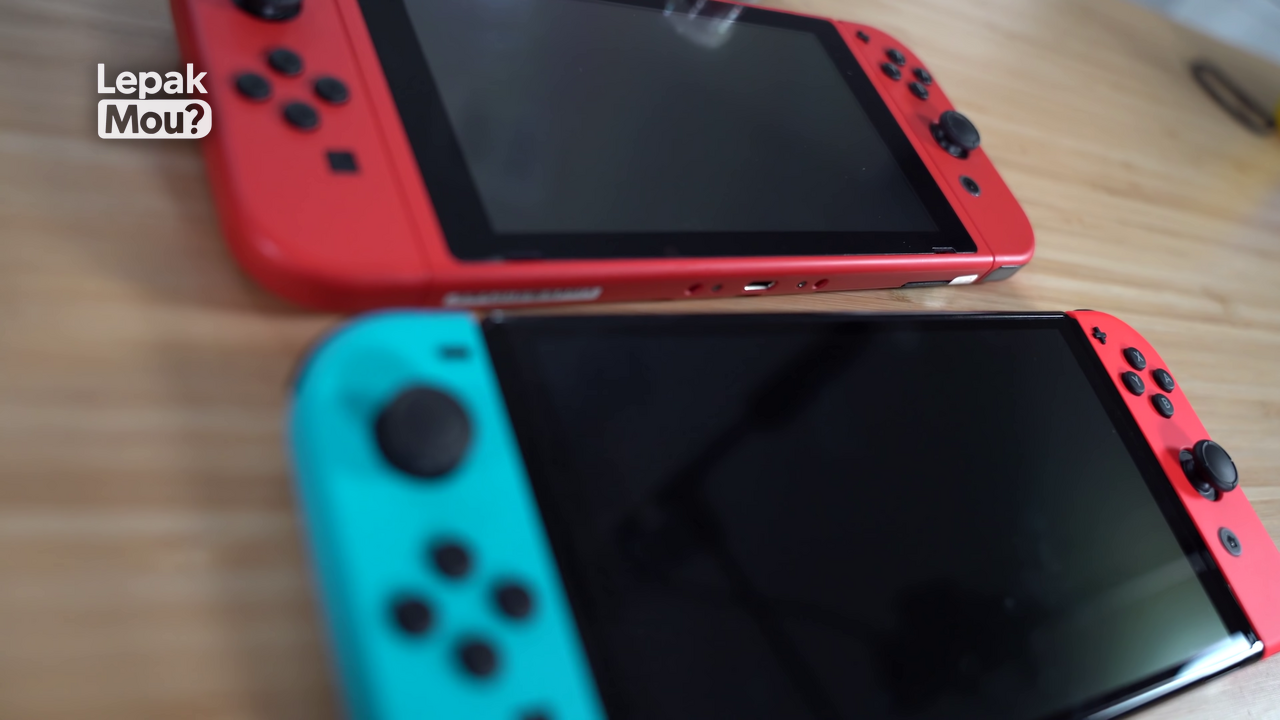
Here’s the plot twist that confuses a lot of people. You’d assume the newer, pricier console has the better screen, right? Not exactly. The Switch 2 uses a larger 7.9-inch LCD, while the older Switch OLED keeps its 7-inch OLED panel with those deep inky blacks and richer, more saturated colours.
So which looks better? It depends on what you value. The OLED still delivers the best contrast of the two. Dark scenes look genuinely dark, not grey, and colours pop in a way LCD struggles to match. Games like Metroid Dread or Hollow Knight look absolutely gorgeous on it. If you’re a handheld-only player who games mostly in a dim room, the OLED screen is a real joy.
But the Switch 2 screen isn’t a downgrade in every way, and this is where it gets interesting. It’s bigger (7.9 inches vs 7 inches), sharper (1080p vs 720p), supports HDR for brighter highlights, and runs at up to 120Hz with variable refresh rate (VRR). In plain language, VRR means motion looks smoother and tearing-free during fast action. So while the OLED wins on contrast, the Switch 2 wins on size, sharpness, and smoothness.
On the switch 2 size vs switch oled question: the Switch 2 is noticeably larger overall. It’s a chunkier device in the hands, which some people love (more screen real estate) and others find less pocketable. If you have smaller hands or you want something that slips easily into a bag for the LRT commute, the OLED is the more compact companion. Both, honestly, look great. It really comes down to whether you prioritise a smaller vibrant OLED or a bigger, smoother, sharper LCD.
Performance and Specs: How Much More Powerful Is the Switch 2?
This is where the gap is not even close. The Switch OLED runs on the same Nvidia Tegra X1 chip that debuted way back in 2015. It’s been a workhorse, but in 2026 it’s genuinely ancient hardware. The Switch 2 uses a custom Nvidia processor with three times the RAM (12GB vs 4GB), and that changes what games are even possible.
The headline feature is DLSS, Nvidia’s AI upscaling tech. In plain English: DLSS lets the Switch 2 render a game at a lower resolution and then intelligently sharpen it up to look near-4K, without hammering the battery or the chip as hard. That’s why the Switch 2 can output up to 4K when docked to your TV, while the OLED tops out at 1080p.
What does all this mean for real gameplay? A few concrete things. Third-party ports that stuttered or looked muddy on the old Switch (think demanding open-world titles) now run smoother and look far sharper. Load times are dramatically faster thanks to the newer storage. And crucially, a growing list of games simply won’t run on the Switch OLED at all, because they’re built for the Switch 2’s horsepower. If you want to play the big, graphically ambitious releases of 2026 and beyond, the OLED just can’t keep up.
For the average player who mostly enjoys Mario Kart, Animal Crossing, and indie gems, the OLED still handles those beautifully. But if “future-proof” matters to you, the Switch 2 is the clear winner. Standard is there.
Battery Life, Size, and Portability
Interesting one here. You’d expect the powerful new console to last longer, but the Switch 2 actually has a more variable battery life. Nintendo lists it at roughly 2 to 6.5 hours depending on the game, because a demanding title draws far more power. The Switch OLED, with its weaker chip, is rated around 4.5 to 9 hours and tends to be more consistent for lighter games.
So for a long-haul flight or a full day out, the OLED can genuinely outlast the Switch 2 if you’re playing less demanding titles. The Switch 2 has a bigger battery, but the hungrier chip eats into that advantage.
On size and feel, the Switch 2 is bigger and heavier (around 534g with Joy-Con vs about 420g for the OLED). The redesigned magnetic Joy-Con 2 controllers snap on and off instead of sliding on rails, which feels sturdier and solves the old wobble issue. There’s also a wider, sturdier kickstand for tabletop play.
Practical advice for KL and Selangor commuters: if you game during a packed MRT or LRT ride and want something light in one hand, the OLED is more comfortable. For flights or longer sessions where a bigger screen is a treat, the Switch 2 is worth the extra heft. Either way, tapau a power bank if you’re going full session mode.
Game Library and Backwards Compatibility
Good news for everyone: the Switch 2 plays the vast majority of your existing Switch games. Your old library isn’t obsolete overnight, so don’t panic. On top of that, the Switch 2 gets its own exclusive titles and “Switch 2 Edition” enhanced versions of older games that run better, look sharper, or add new features.
The Switch OLED, on the other hand, is limited to the original Switch library. It’ll keep playing everything it plays today, but it won’t get the new Switch 2-exclusive releases going forward. That’s the core upgrade incentive: if the exciting new games are only on Switch 2, that’s your reason to jump.
For OLED owners feeling FOMO, relax. The existing Switch library is one of the best in gaming history, and it’s not going anywhere. There are hundreds of superb games, from first-party Nintendo classics to a massive catalogue of indies and RPGs, that will keep you busy for years on the OLED. You’re not missing out on the fundamentals, just the newest cutting-edge releases.
Switch 2 vs Steam Deck OLED: The Handheld Showdown
For the PC gamers eyeing both, here’s the quick showdown. The Steam Deck OLED, made by Valve, is a completely different beast. It’s essentially a portable PC that runs your Steam library, complete with those legendary Steam sales. The Switch 2 lives in Nintendo’s closed, polished ecosystem with exclusives you literally cannot play anywhere else.
On the switch 2 vs steam deck oled performance angle, it’s nuanced. The Steam Deck OLED has more raw RAM (16GB) and a stunning 7.4-inch OLED HDR screen at 90Hz, plus access to graphically massive PC games. The Switch 2 counters with DLSS efficiency, 4K docked output, and a far simpler plug-and-play experience. The Steam Deck OLED is heavier (around 640g) and has a steeper learning curve.
Price-wise, the Steam Deck OLED is typically grey-imported into Malaysia (Valve doesn’t officially sell it here), so expect to pay a premium and forfeit local warranty. Prices commonly land north of RM2,500 to RM3,000 depending on storage and importer.
Who should buy what? If you want Zelda, Mario, Pokémon, and a fuss-free experience the whole family can pick up, the Switch 2. If you’re a PC gamer who wants a portable Steam library and doesn’t mind tinkering, the Steam Deck OLED. Simple as that.
Price in Malaysia: Switch 2 vs Switch OLED Cost Compared
This is where most international guides leave Malaysians hanging, quoting USD prices with zero local context. Let’s fix that. Nintendo hardware in Malaysia is officially distributed by Maxsoft, and buying from authorised channels is how you get a valid local warranty.
| Item | Est. Malaysia price (RM) | Notes |
|---|---|---|
| Nintendo Switch 2 (base) | Around RM2,199 | Widely reported launch pricing via authorised retailers |
| Switch 2 game bundle | Around RM2,299 to RM2,399 | Console plus a pack-in title |
| Nintendo Switch OLED | Around RM1,199 to RM1,299 | Frequently discounted during sales |
| microSD Express card (256GB) | Around RM200 to RM350 | Switch 2 needs Express cards, pricier than normal microSD |
| Extra Joy-Con 2 pair | Around RM400 | For multiplayer |
| Nintendo Switch Online | Around RM90 to RM130/year | For online play and classic games |
Note the hidden cost with the Switch 2: it requires the newer, faster microSD Express cards, which cost more than the standard microSD cards the OLED uses. Factor that into your total budget if you download a lot of games. Prices above are estimates and move with promotions and exchange rates, so confirm current pricing before you buy.
Where to buy in Malaysia (authorised):
- All IT Hypermarket (Plaza Low Yat, Kuala Lumpur, plus branches nationwide). Typical mall hours, roughly 10:00 AM to 9:00 PM daily. Google Maps
- GameStore and console specialists inside Plaza Low Yat, Jalan Bukit Bintang, 55100 Kuala Lumpur. Open daily around 11:00 AM to 8:00 PM. Google Maps
- Best Denki and Harvey Norman (various malls including Mid Valley Megamall and 1 Utama). Mall hours, roughly 10:00 AM to 10:00 PM. Google Maps
- Official Maxsoft/Nintendo stores on Shopee and Lazada. Online, 24/7 ordering. Look for the official/authorised store badge.
One warning: avoid grey-import units just to save a bit. They often come with no local warranty, potential region or plug issues, and you’re on your own if something breaks. For a purchase this size, confirm solid warranty is worth the peace of mind.
Pros and Cons of Each Console
Quick digest for the skimmers.
Nintendo Switch 2 Pros
- Massive performance jump, runs demanding games smoothly
- 4K output when docked to your TV
- Bigger, sharper 1080p screen with 120Hz and VRR
- Future-proof: gets all the new exclusives
- Sturdier magnetic Joy-Con 2 and wider kickstand
Nintendo Switch 2 Cons
- Higher price (around RM2,199)
- LCD screen, not OLED, so weaker contrast
- Battery drains faster on demanding games
- Requires pricier microSD Express cards
- Heavier and bulkier to hold
Nintendo Switch OLED Pros
- Superior OLED screen with deep blacks and vivid colours
- Much cheaper (often under RM1,300)
- Proven, enormous game library
- Lighter and more compact for commutes
- Uses cheap standard microSD cards
Nintendo Switch OLED Cons
- Aging 2015-era hardware
- Won’t get new Switch 2 exclusives long-term
- Only 720p handheld, 1080p docked
- No DLSS, HDR, or high refresh rate
Which One Should You Buy? Our Verdict
Let’s make this easy by matching the console to the person.
Buy the Switch 2 if: you want the best performance, you plan to play new releases for years, and you game on your TV a lot (that 4K output is real). It’s the future-proof pick for anyone who considers themselves a proper gamer.
Buy the Switch OLED if: you’re budget-conscious, you’re a handheld-only player who adores that gorgeous OLED screen, or you mainly want to enjoy the existing library. At under RM1,300, it’s outstanding value and still a fantastic console in 2026.
Best for families and kids: the Switch OLED. It’s cheaper (less heartbreak if a child drops it), lighter for small hands, and plays all the family favourites. Unless the kids specifically want the newest Switch 2 games, the OLED saves you a good chunk of RM.
Best for hardcore and portable gamers: the Switch 2, no contest. The power, the sharper screen, and the exclusive library make it the enthusiast’s choice.
For the average Malaysian buyer weighing roughly a RM900 to RM1,000 price gap, ask yourself one question: do you care about the newest, most demanding games? If yes, the Switch 2 is worth it. If you just want to have fun with proven classics, the OLED still delivers.
Frequently Asked Questions
Final Thoughts
Both consoles are genuinely great, they just serve different wallets and different gamers. The Switch 2 is the powerhouse for anyone chasing the latest and greatest, while the Switch OLED is the smart value pick that still holds up beautifully in 2026. There’s no wrong answer here, only the right one for your needs and budget. Whichever you choose, buy from an authorised Malaysian retailer so your warranty is covered and you can game with peace of mind. Happy gaming, and enjoy lah.