
Best SUV in Malaysia 2026: 15 Picks, Prices & Specs

The Short Answer: Best SUVs in Malaysia Right Now
If you want the best SUV in Malaysia for an average Klang Valley family in 2026, the Honda CR-V is still the one to beat on space, refinement and resale. But the right answer depends entirely on your budget band and your loan eligibility, so here are the category winners first.
- Best overall: Honda CR-V, from around RM160,000
- Best under RM100,000: Proton X50, from around RM86,000
- Cheapest new SUV: Perodua Ativa, from around RM64,800
- Best family 7-seater SUV: Proton X90, from around RM124,000
- Best value Chinese SUV: Chery Tiggo Cross, from around RM85,000
- Best EV SUV: Proton e.MAS 7, from around RM106,000
- Best resale value: Honda HR-V, from around RM120,000
All prices in this guide are indicative on-the-road figures for Peninsular Malaysia without insurance. Malaysian SUV pricing moves with variant revisions, SST changes and dealer campaigns, so treat these as a planning baseline and confirm the final quote at the showroom.
All 15 SUVs Compared: Price, Engine, Fuel Use and Road Tax
This is the table most buyers actually want. It is sorted ascending by price, so the under RM100,000 options appear first. Road tax figures are calculated from the standard JPJ private-vehicle schedule for Peninsular Malaysia by engine capacity.
| Model | Price from (RM) | Engine / Powertrain | Seats | Boot (L) | Claimed L/100km | Road tax (RM/yr) | Best for |
|---|---|---|---|---|---|---|---|
| Perodua Ativa | ~64,800 | 1.0L 3-cyl turbo, CVT | 5 | 303 | ~5.3 | 20 | First SUV, lowest running cost |
| Perodua Aruz | ~73,000 | 1.5L NA, 4AT, RWD | 7 | 514 (row 3 folded) | ~6.2 | 90 | Cheapest 7-seater |
| Chery Tiggo Cross | ~85,000 | 1.5L turbo, CVT | 5 | ~400 | ~6.5 | 90 | Most kit per ringgit |
| Proton X50 | ~86,000 | 1.5L TGDi 3-cyl, 7DCT | 5 | 330 | ~6.4 | 90 | Value compact SUV |
| Proton X70 | ~98,800 | 1.5L TGDi 3-cyl, 7DCT | 5 | 515 | ~7.0 | 90 | Space on a budget |
| Proton e.MAS 7 | ~106,000 | Electric, ~165kW | 5 | ~400 | n/a (~17 kWh/100km) | See EV note | First EV, CKD support |
| Honda HR-V | ~120,000 | 1.5L NA / 1.5L turbo / 1.5L e:HEV | 5 | 335 to 404 | 6.1 turbo / 4.1 e:HEV | 90 | Resale value |
| BYD Atto 3 | ~124,000 | Electric, 150kW | 5 | 440 | n/a (~16 kWh/100km) | See EV note | Proven EV package |
| Proton X90 | ~124,000 | 1.5L mild-hybrid 3-cyl, 7DCT | 6 or 7 | 257 (row 3 up) | ~6.7 | 90 | Budget 7-seater SUV |
| Toyota Corolla Cross | ~137,000 | 1.8L NA / 1.8L hybrid | 5 | 440 | 6.1 / 4.3 hybrid | 279 | Low-risk ownership |
| Jaecoo J7 | ~140,000 | 1.6L turbo / 1.5L plug-in hybrid | 5 | 412 | ~7.0 / ~1.0 PHEV cycle | 90 | Design and equipment |
| Mazda CX-5 | ~143,000 | 2.0L / 2.5L NA, 6AT | 5 | 442 | ~6.9 | 379 (2.0) / 868 (2.5) | Driving feel |
| Honda CR-V | ~160,000 | 1.5L turbo / 2.0L e:HEV | 5 | 581 | 7.1 / 5.4 e:HEV | 90 / 377 | Best all-round family SUV |
| Nissan X-Trail | ~180,000 | 1.5L e-Power series hybrid | 5 | 575 | ~6.1 | 90 | Long highway drives |
| Toyota Harrier | ~249,000 | 2.0L NA, CVT | 5 | 409 | ~7.0 | 373 | Premium without a German badge |
Prices exclude insurance and registration variations, and Sabah and Sarawak pricing differs from Peninsular Malaysia. Road tax for electric vehicles no longer follows engine capacity. Under the revised structure introduced for 2026, EV road tax is based on motor power output and is significantly lower than the old formula, while locally assembled EVs are widely reported to remain exempt until the end of 2027. The current schedule is published by the Jabatan Pengangkutan Jalan Malaysia.
How We Picked These SUVs
This is an editorial shortlist, not a dealer brochure, so here is exactly what went into it.
We started with Malaysian sales reality. Registration data published by the Malaysian Automotive Association shows which SUVs Malaysians actually buy, and every model here either sells in volume or fills a specific gap (cheapest, best EV, best 7-seater). Specifications and variant pricing were taken from official Malaysian brand sources including Proton, Perodua and Honda Malaysia. Crash performance comes from ASEAN NCAP published ratings rather than brand marketing claims.
Running costs were calculated from the JPJ road tax schedule, typical Malaysian comprehensive insurance bands, published service schedules and a standard 90 percent hire purchase at a representative flat rate. Where we mention real-world fuel consumption, we are reporting the figures Malaysian owners commonly quote on forums such as Lowyat and r/kereta, clearly separated from the manufacturer’s claimed figure. Owner sentiment is summarised as recurring themes, not individual quotes.
What we deliberately excluded: anything above RM300,000, and any model whose service network does not realistically cover a buyer outside the Klang Valley.
Best SUVs Under RM100,000 in Malaysia
Under RM100,000 in 2026 buys you a genuinely well-equipped compact SUV with a turbo engine, a 5-star ASEAN NCAP body and at least basic driver assistance. What it does not buy is a powered tailgate on the base trim, ventilated seats, or a full ADAS suite unless you stretch to the top variant. This is also the band where the Chinese brands have shifted the goalposts hardest, because they now throw in equipment that cost RM140,000 three years ago.
1. Perodua Ativa

From around RM64,800 for the X variant up to roughly RM73,400 for the AV, the Ativa is still the cheapest way into a new SUV in Malaysia, and the maths behind it is hard to argue with. The 998cc three-cylinder turbo falls into the lowest JPJ road tax band at RM20 a year, insurance is cheap, and Perodua service costs typically land between RM200 and RM350 per 10,000km visit at any of the hundreds of service centres nationwide, including small towns where other brands simply have no presence.
Claimed consumption is around 5.3 L/100km and owners commonly report figures in the 6 to 7 L/100km range in mixed Klang Valley driving, which is still excellent. The 303-litre boot handles a pram plus a weekly grocery run, though a full balik kampung load for four will need the rear seats dropped. ASEAN NCAP awarded the Ativa a 5-star rating, and the AV trim’s Advanced Safety Assist package includes autonomous emergency braking.
Be honest about the downsides. The CVT drones noisily when you push it, a fully loaded uphill run up Karak with four adults and bags will have the little turbo working hard, and the cabin plastics feel exactly like a sub-RM70,000 car. But for a first SUV, nothing beats it on total cost.
2. Perodua Aruz
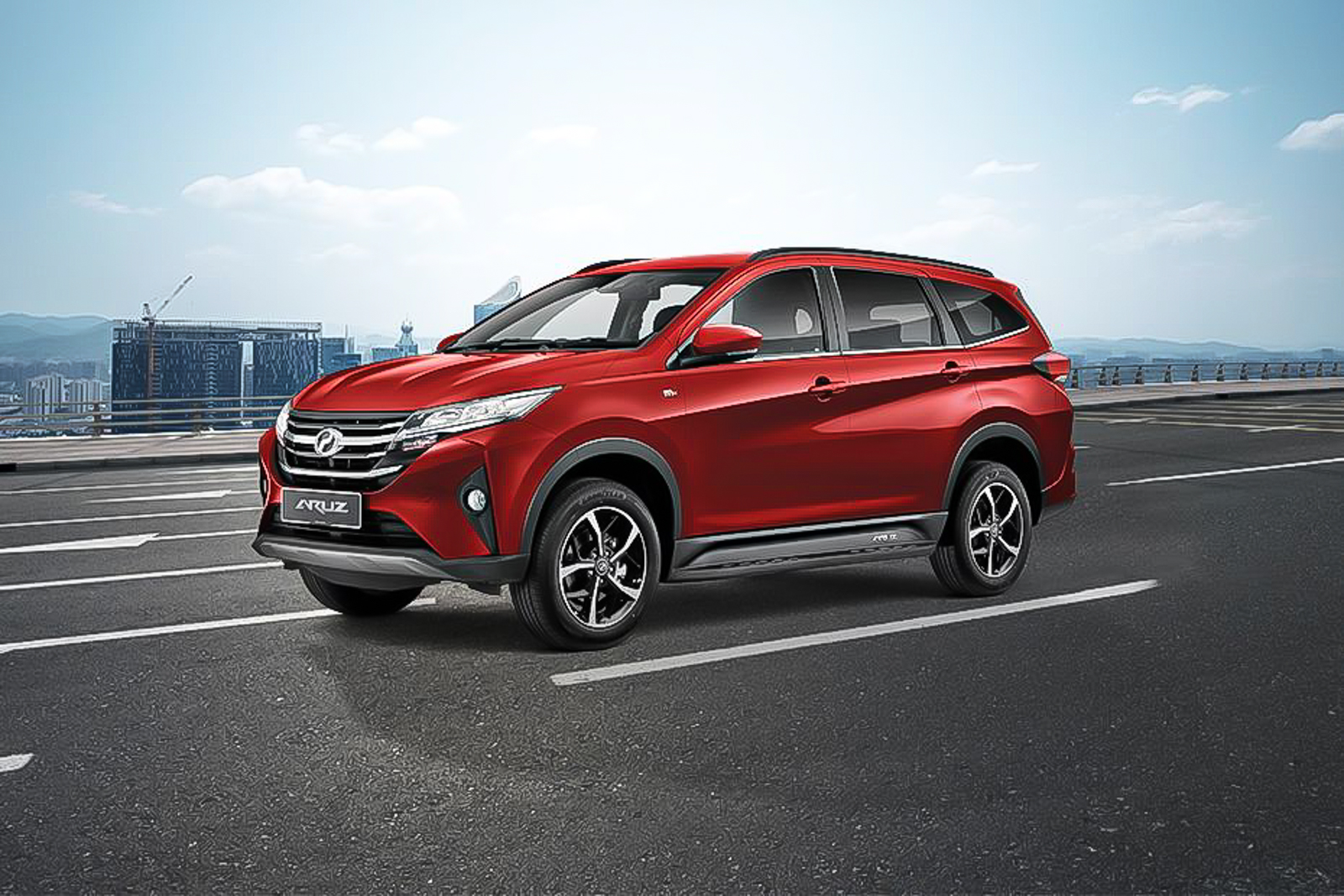
From around RM73,000, the Aruz is the cheapest 7-seater SUV you can buy new in Malaysia, and that single fact keeps it selling. It is rear-wheel drive, built on a ladder-ish body-on-frame derived platform, and has 220mm of ground clearance, which matters more than you think during flash floods and on kampung roads with aggressive speed bumps.
The honest assessment of the third row: it works for primary school children or for a 20-minute airport run with adults. It is not a space two grown adults will tolerate from KL to Kuantan. With all three rows up, the boot is effectively a shopping bag shelf. Fold row three and you get a genuinely useful 514 litres.
The 1.5-litre naturally aspirated engine with a four-speed automatic is the weak point. It feels strained fully loaded, and the four-speed box keeps revs high on the highway, which hurts both noise and fuel use. Road tax is RM90, service is cheap, and the Perodua badge means resale stays strong. If you need seven seats for under RM80,000, there is no alternative.
3. Proton X50
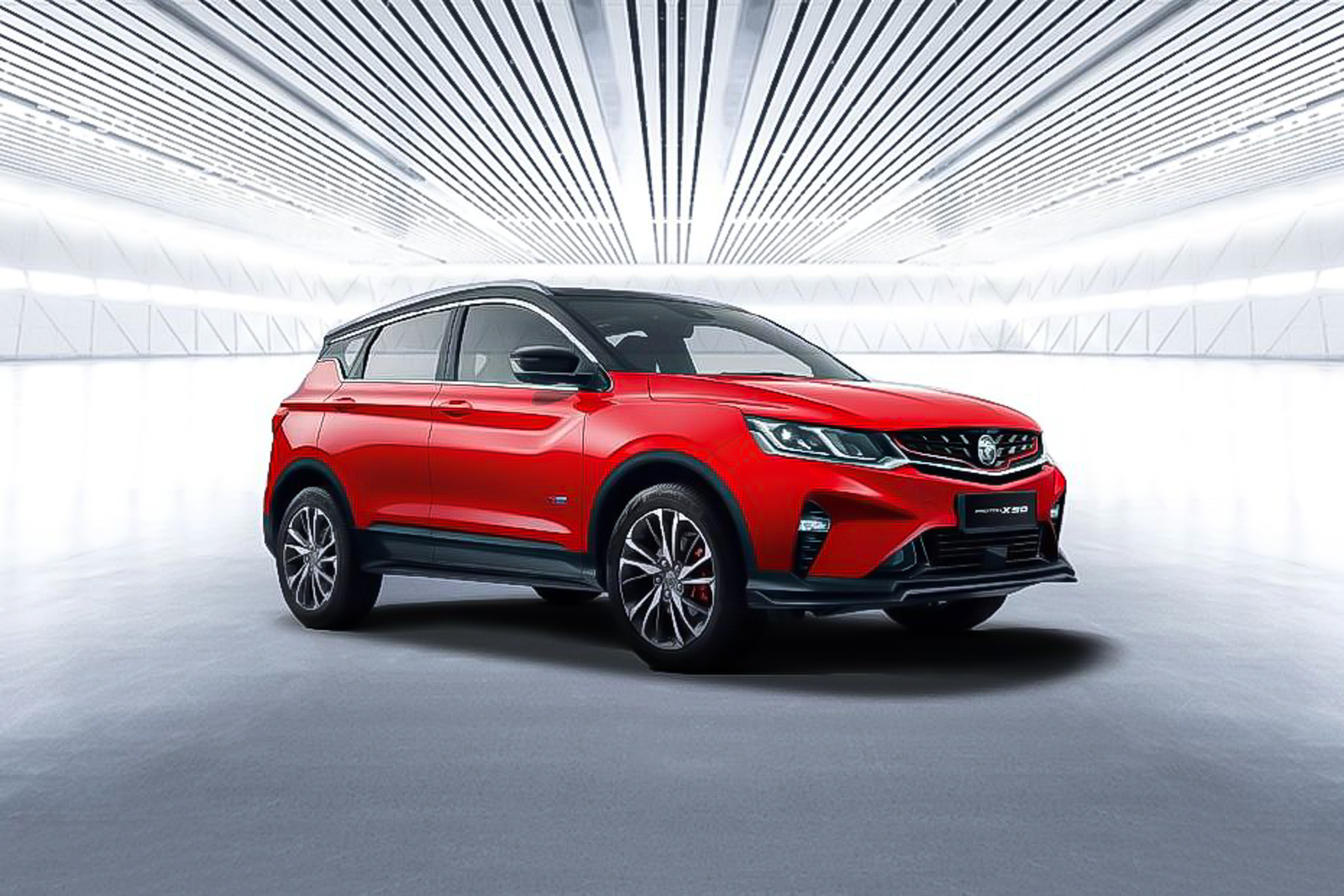
The X50 remains the default answer when a Malaysian asks what to buy with roughly RM90,000 to RM120,000. The range typically starts around RM86,000 and runs to roughly RM125,000 for the Flagship depending on the current line-up, and the headline is the 1.5-litre TGDi three-cylinder turbo in the top trims, which delivers around 177hp and makes the car genuinely quick for the money. Proton’s ADAS package on upper variants includes adaptive cruise, lane keeping and autonomous emergency braking, and the car carries a 5-star ASEAN NCAP rating.
The real-world counterpoint is fuel consumption. Against a claimed figure around 6.4 L/100km, owners commonly report 8.5 to 9.5 L/100km in Klang Valley traffic, noticeably thirstier than an Ativa or an HR-V hybrid. Owner reports also flag occasional infotainment lag on older units and long service-centre waits at busy outlets, though parts availability is excellent because the car is everywhere.
The live cross-shop is the Chery Tiggo Cross. In short: the X50 wins on resale certainty, service network depth and driving sharpness, while the Chery wins on equipment count and price. If you plan to sell within four years, the Proton is the safer ringgit.
4. Chery Tiggo Cross
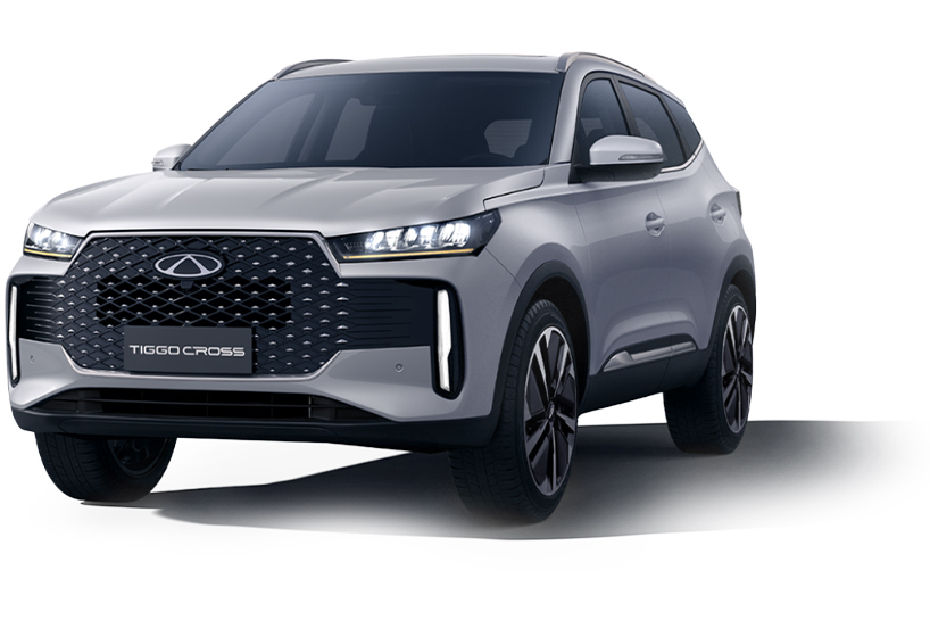
Chery’s compact SUV is the value disruptor in this band, usually listed from the mid-RM80,000s. For that money the equipment list typically includes a large touchscreen, a 360-degree camera, a panoramic sunroof on upper trims, six airbags and a full ADAS suite, which is more kit per ringgit than the equivalent Proton or Perodua trim. The 1.5-litre turbo with a CVT is smooth rather than fast, and the roughly 400-litre boot is competitive for the class. Chery backs it with a long warranty package, which is doing a lot of work in convincing cautious buyers.
Now the honest part. Three-year resale value for Chery in Malaysia is still an unknown quantity, and early indications across the newer Chinese brands point to faster depreciation than Proton or Perodua. The service network has grown quickly in the Klang Valley, Penang and Johor Bahru, but it thins out noticeably once you are east of Kuantan or in smaller Borneo towns. If you keep cars for eight to ten years and live near a major city, the value is real. If you trade every three years or live far from a dealer, think twice.
Best Family SUVs from RM100,000 to RM180,000
The extra RM40,000 over the entry band buys three things that matter daily: a full driver-assistance suite as standard rather than top-trim-only, proper noise insulation so highway conversation does not become shouting, and in some cases a hybrid powertrain that genuinely halves your city fuel bill. This is also where the first usable third rows appear.
5. Proton X70

Priced from roughly RM98,800 and topping out around RM124,000, the X70 is the dependable all-rounder of the Proton range. It is a size up from the X50, with a 515-litre boot that will take two large suitcases plus soft bags without folding anything, and a rear bench with real legroom for a 178cm adult sitting behind a similarly sized driver.
The 1.5-litre TGDi turbo with a seven-speed dual clutch is adequate rather than rapid, and real-world consumption typically sits in the 8.5 to 9.5 L/100km range against a claimed 7.0. On the PLUS highway at 110km/h it settles nicely, with wind noise well suppressed for the money, which is why it remains popular with Grab drivers and long-distance commuters. Road tax is RM90.
Owner reports consistently raise two issues: infotainment responsiveness on earlier units, and service-centre queues at high-volume outlets, so book ahead. Against that, parts are cheap and available everywhere, and the 5-star ASEAN NCAP rating plus the ADAS package on higher trims make it a sensible family buy.
6. Proton X90

From around RM124,000 to RM164,000, the X90 is Proton’s big seven-seater and the cheapest way into a large three-row SUV with a modern safety suite. Proton markets it as seating seven, and the brochure is technically correct, but you should test the claim yourself rather than take it on faith. The third row is usable for teenagers and for adults on short trips, less so for a three-hour drive, and with all three rows up the boot drops to 257 litres, which is roughly two backpacks and a small cooler. Fold row three and the space is genuinely cavernous.
The powertrain is the talking point. A 1.5-litre three-cylinder with 48V mild hybrid assistance in a vehicle this large sounds optimistic, and fully loaded on a long incline it does need planning. Claimed consumption is around 6.7 L/100km; owners more commonly report 8 to 9.5 L/100km. Road tax is only RM90 thanks to the small engine, which is a genuine saving over a conventional 2.5-litre seven-seater.
Buy it if you need three rows occasionally and space constantly. If you need seven adult seats every single day, read the 7-seater section below before you sign anything.
7. Honda HR-V
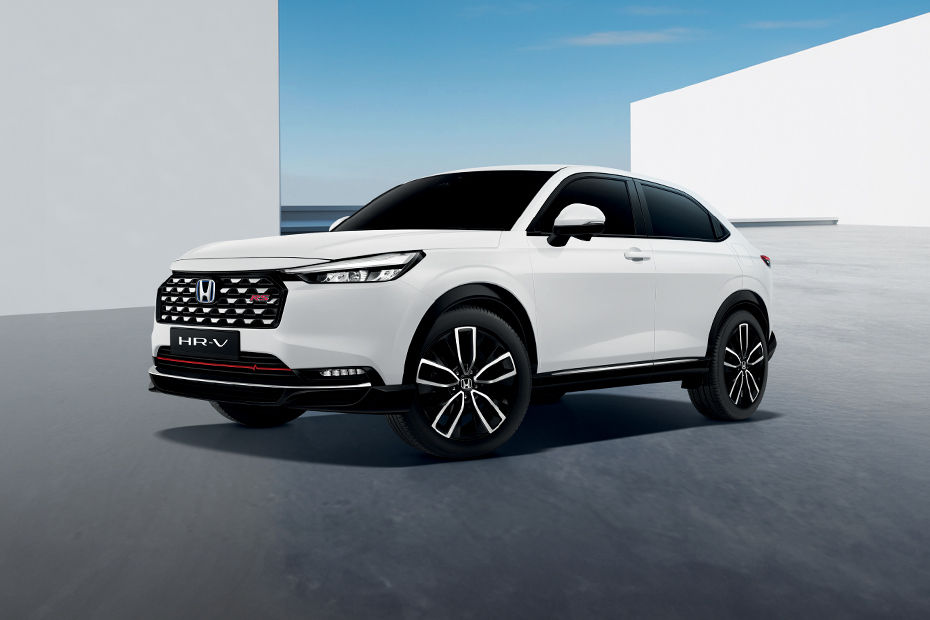
Roughly RM120,000 to RM151,000 across the range, and the strongest resale story in this guide. Malaysian used-car demand for Honda remains stubbornly high, which means the HR-V typically retains a larger share of its value at the three-year mark than almost anything else in its class. If you change cars every three to four years, that resale gap can be worth more than the discount a rival brand offers you today.
The variant choice matters. The 1.5-litre turbo is the enthusiast’s pick, but the RS e:HEV hybrid is the one that makes sense for Klang Valley driving, with a claimed 4.1 L/100km and owners commonly reporting figures in the low fives in heavy traffic, because the electric motor does most of the stop-start work. Honda Sensing is available across most of the range, and the lane-keeping system is one of the better-calibrated ones on Malaysian highways, although faded lane markings on older stretches will still confuse it.
The trade-off is space. The boot is 335 litres on the hybrid and around 404 on the turbo, which is smaller than a Corolla Cross or a CR-V, and the Magic Seat flexibility does not fully compensate on a long balik kampung run. Service costs are higher than Proton or Perodua, typically RM350 to RM600 per visit.
8. Toyota Corolla Cross
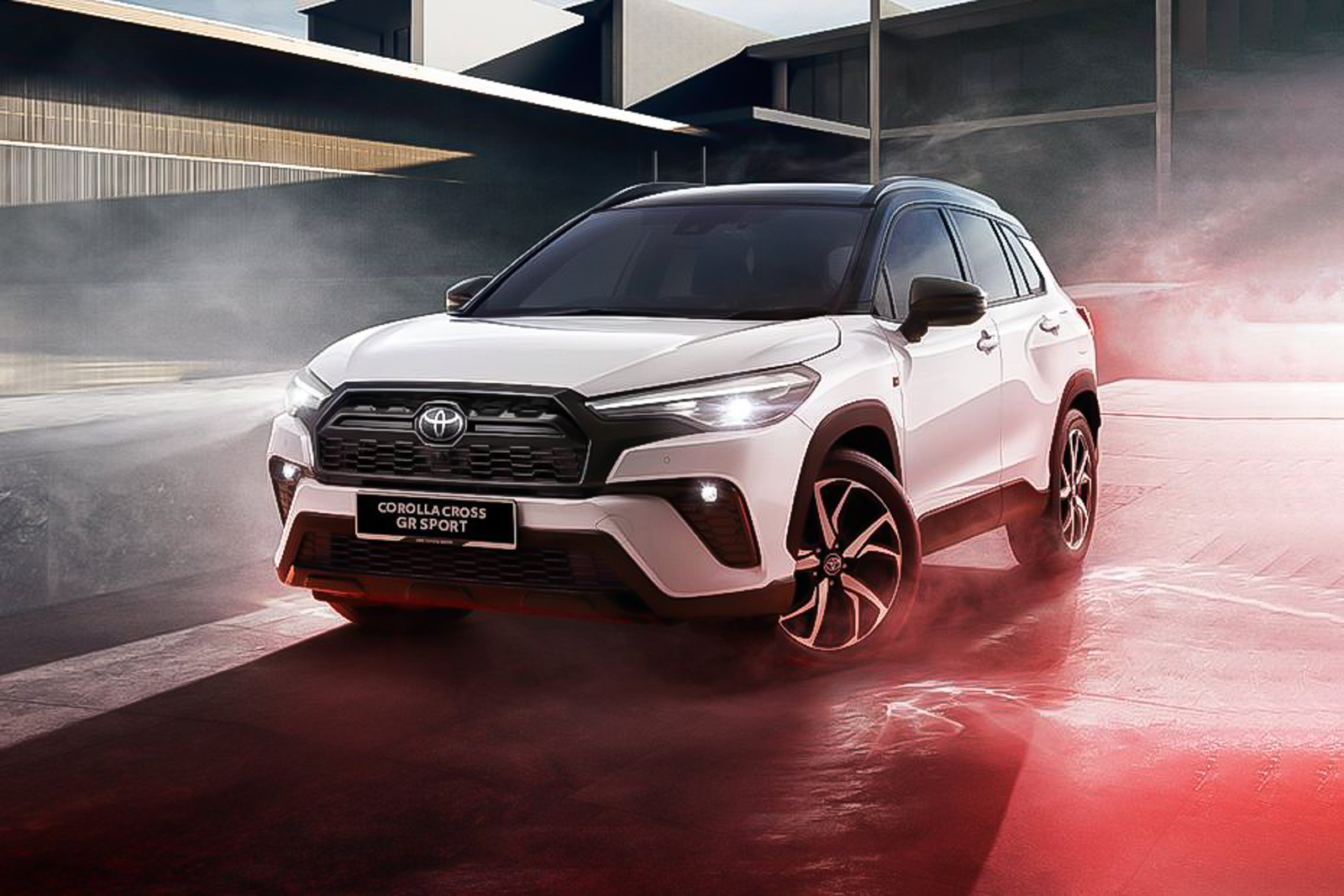
From roughly RM137,000 for the 1.8G to around RM160,000 for the hybrid, the Corolla Cross is the low-risk choice, and that is meant as a compliment. Toyota Safety Sense comes as standard across the range, the hybrid system is a proven Toyota unit rather than a first-generation experiment, the service network reaches every state, and trade-in values are consistently strong.
The 440-litre boot is a genuinely good size for the class, rear legroom is competitive, and the hybrid’s claimed 4.3 L/100km translates to real-world figures Malaysian owners typically report in the 5 to 6 range, which makes a 15,000km year cost under RM1,700 in fuel. Road tax is RM279 because of the 1,798cc engine, noticeably more than the RM90 you pay on a 1.5-litre rival, so factor that in.
Be clear about what you give up. It is less exciting to drive than a CX-5 or an X50, and on a pure equipment-per-ringgit basis a Chery or a Jaecoo will embarrass it. The question you are really answering is whether you want more kit today or more certainty in three years. Toyota is the certainty option.
Best Premium SUVs from RM180,000 to RM300,000
This band is for upgraders, two-car households and anyone doing serious highway mileage where refinement stops being a luxury and starts being a necessity. If your budget runs beyond RM300,000, our guide to luxury SUVs by fuel type and size is the better starting point.
9. Honda CR-V

From around RM160,000 for the 1.5 turbo to roughly RM204,000 for the 2.0 e:HEV RS, the CR-V is our pick for the best SUV in Malaysia for a mainstream family, and it earns it on fundamentals rather than gimmicks. The 581-litre boot is the largest five-seater space in this guide and will genuinely take two 28-inch cases, a stroller and soft bags with the parcel shelf still in place. Rear legroom is generous enough that a 178cm passenger sits comfortably behind a 178cm driver.
The powertrain decision is straightforward. The 1.5 turbo costs less and attracts only RM90 in road tax thanks to its 1,498cc capacity, with real-world consumption owners typically report around 9 L/100km. The 2.0 e:HEV hybrid is quieter and markedly more efficient in traffic, with claimed 5.4 L/100km and owner-reported figures in the low sixes, but its 1,993cc petrol engine pushes road tax to roughly RM377 a year. Over nine years that difference is under RM3,000, so if you commute in heavy traffic, take the hybrid.
Honda Sensing handles Klang Valley stop-go traffic well, holding and resuming without drama, though like most systems it will occasionally lose confidence on worn lane markings. Service costs run higher than a national brand, and the CR-V is physically wide, so tight older mall parking bays in places like Bangsar require care. If RM160,000 is a stretch, the HR-V delivers 80 percent of the experience for RM40,000 less.
10. Mazda CX-5

From roughly RM143,000 to around RM190,000, the CX-5 exists for one reason: it is the best-driving SUV at this price in Malaysia. Steering weight and response are closer to a sedan than a crossover, body control over the undulating sections of the LDP is noticeably tighter than its rivals, and the interior materials still feel a class above the price.
The counterpoints are real. Rear seat space trails the CR-V and X-Trail meaningfully, the 442-litre boot is competitive but not class-leading, and the naturally aspirated engines drink more in traffic than a turbo or hybrid rival. Road tax is the sting: RM379 a year for the 1,998cc 2.0-litre and roughly RM868 for the 2,488cc 2.5-litre, which is among the highest in this guide. The service network is also smaller than Honda’s or Toyota’s, so check that there is a Mazda centre in your state before you commit.
Buy it if you drive for pleasure and carry four people rather than five. Skip it if the car is primarily a family logistics vehicle.
11. Nissan X-Trail

From around RM180,000, the current X-Trail in Malaysia is built around the e-Power series hybrid, where the 1.5-litre variable-compression petrol engine acts purely as a generator and the wheels are driven by an electric motor. The practical result is EV-like smoothness and instant torque in city traffic without any charging infrastructure to worry about, and because the engine is 1,497cc, road tax is only RM90.
Interior space is the other draw: 575 litres of boot, a wide rear bench and seat comfort that holds up over a three-hour run from KL to Penang. Cabin noise is well suppressed at cruising speed, although under hard acceleration the engine revs independently of road speed, which some drivers find odd at first. It also makes a sensible companion for regular long-distance driving, whether that is a work commute to Seremban or a run to the coast.
The hesitation most Malaysian buyers have is resale. Nissan trade-in values have historically lagged Honda and Toyota in this segment, and that gap does not look likely to close quickly. Also note that the Malaysian-market X-Trail is a road-biased crossover. It handles unsealed kampung roads and flooded underpasses fine, but it is not an off-roader and should not be bought as one.
12. Toyota Harrier

Official Toyota Malaysia pricing for the Harrier starts around RM249,000 for the 2.0-litre Luxury, and the pitch is simple: a quiet, beautifully trimmed, well-equipped SUV that feels close to an entry-level German model for similar money, with Toyota’s service network and parts pricing behind it. Toyota Safety Sense comes as standard, the cabin is genuinely hushed on the highway, and the 409-litre boot is adequate rather than generous. Road tax on the 1,986cc engine is roughly RM373 a year.
Two warnings. First, the Harrier is a road-biased crossover with modest ground clearance, so ignore any description of it as off-road capable. Second, and more importantly, there is a large grey-import market for recond Harriers in Malaysia, often hybrid variants not sold officially here. A recond unit can look like a bargain, but you get an importer warranty rather than a Toyota Malaysia one, hybrid battery support is a question mark, and resale is weaker than for an officially distributed car. If you want the hybrid experience with full local backing, a CR-V e:HEV or a Corolla Cross hybrid is the safer route.
Best Electric and Hybrid SUVs in Malaysia (2026)
EVs stopped being a novelty in Malaysia somewhere around 2024, and in 2026 an electric SUV is a perfectly rational family car for a specific type of household. The question is whether you are that household.
13. Proton e.MAS 7
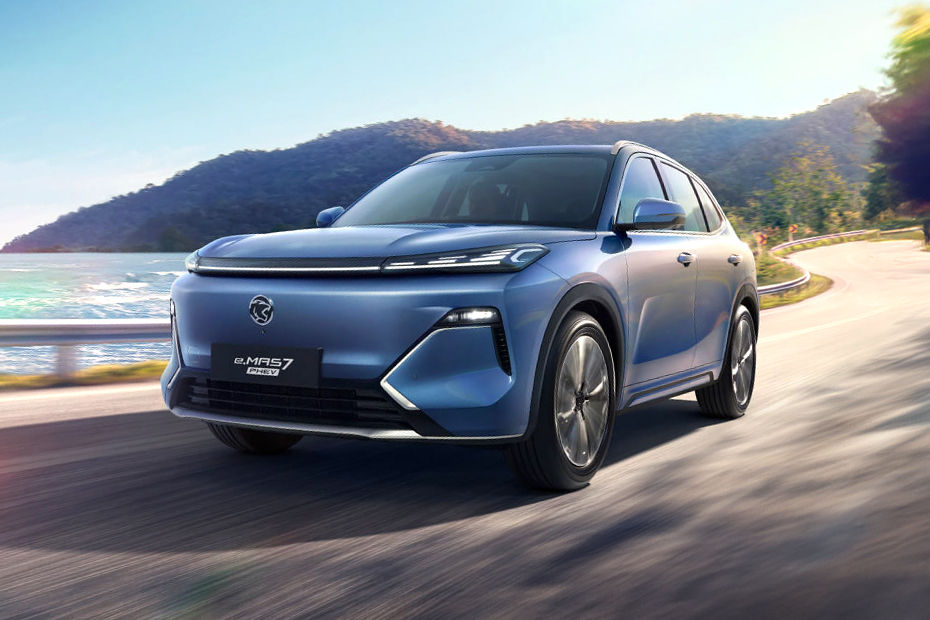
From around RM106,000 for the Prime and roughly RM120,000 for the Premium, the e.MAS 7 is the most important EV launch for mainstream Malaysian buyers, because it is locally assembled and supported by the largest service network of any EV brand here. Real-world range in Malaysian conditions, meaning aircon running hard and highway speeds, is typically reported in the 300 to 380km region depending on variant and driving style, which comfortably covers a week of Klang Valley commuting on home charging.
The ownership maths is the selling point. Locally assembled EVs are widely reported to remain road tax exempt until the end of 2027, servicing is minimal and cheap because there is no oil, filter or gearbox service, and home charging at typical domestic tariffs works out to roughly RM1,100 to RM1,300 a year at 15,000km. That is less than half what a comparable petrol SUV costs to fuel.
The caution is resale. EV residuals in Malaysia are still finding their level, battery warranty terms matter enormously, and a car this new has no three-year trade-in track record yet.
14. BYD Atto 3
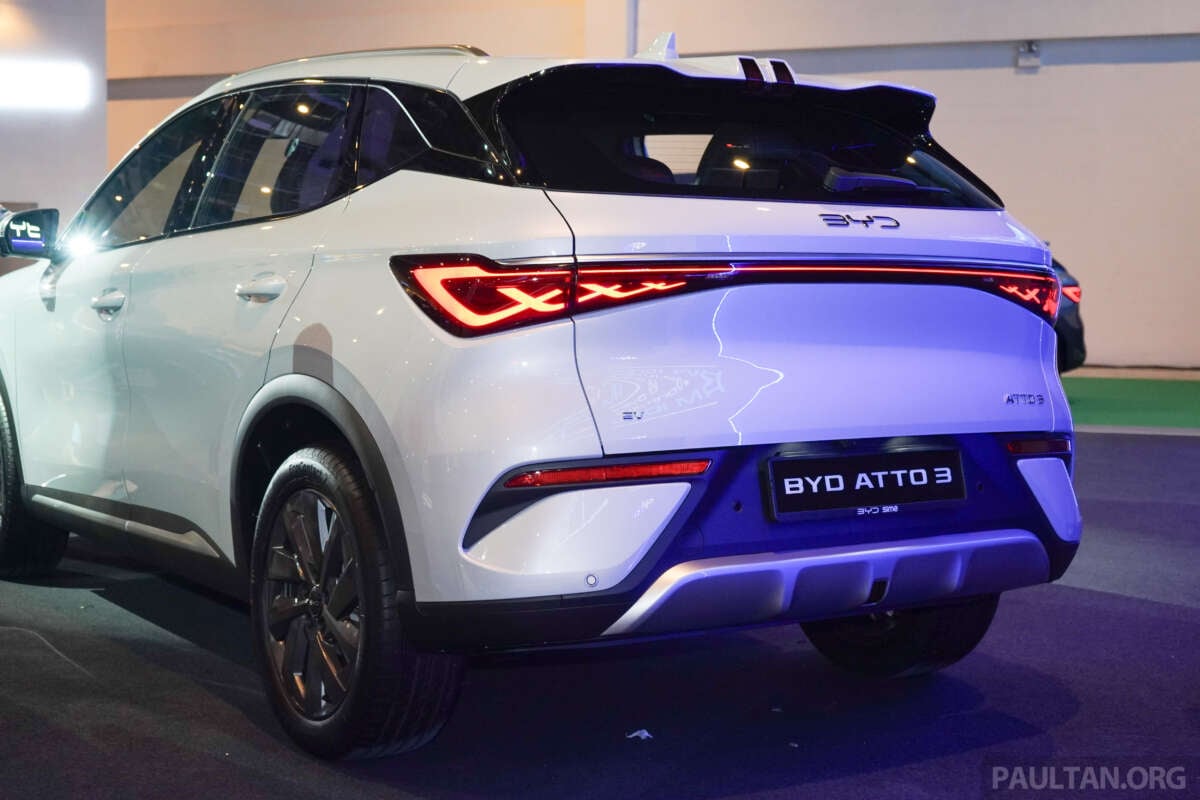
Typically listed from around RM124,000 after various price revisions, the Atto 3 is the EV that proved the segment works in Malaysia. It has a 440-litre boot, a 5-star ASEAN NCAP rating, a blade battery with a strong safety record, and real-world range Malaysian owners commonly report in the 350 to 400km band for the extended-range version. Build quality and ride comfort are solid, and the vehicle-to-load function is genuinely useful for picnics and power cuts.
Two practical points. As an imported EV it falls under the revised 2026 road tax structure based on motor output rather than engine capacity, which is still far cheaper than an equivalent petrol SUV but is no longer zero. And charging reality outside the Klang Valley needs planning. DC fast charging along the North-South Expressway has improved a lot, but coverage in east coast and interior towns remains patchy, so a long balik kampung drive needs a route plan rather than hope.
Honest verdict on EVs generally: if you live in a landed home where you can install a home charger for roughly RM3,000 to RM6,000 including wiring, and your weekly driving is under 300km, an EV will save you real money. If you live in a condo where management has not approved EV charging, or you regularly drive long distances to places without fast chargers, wait another cycle.
15. Jaecoo J7
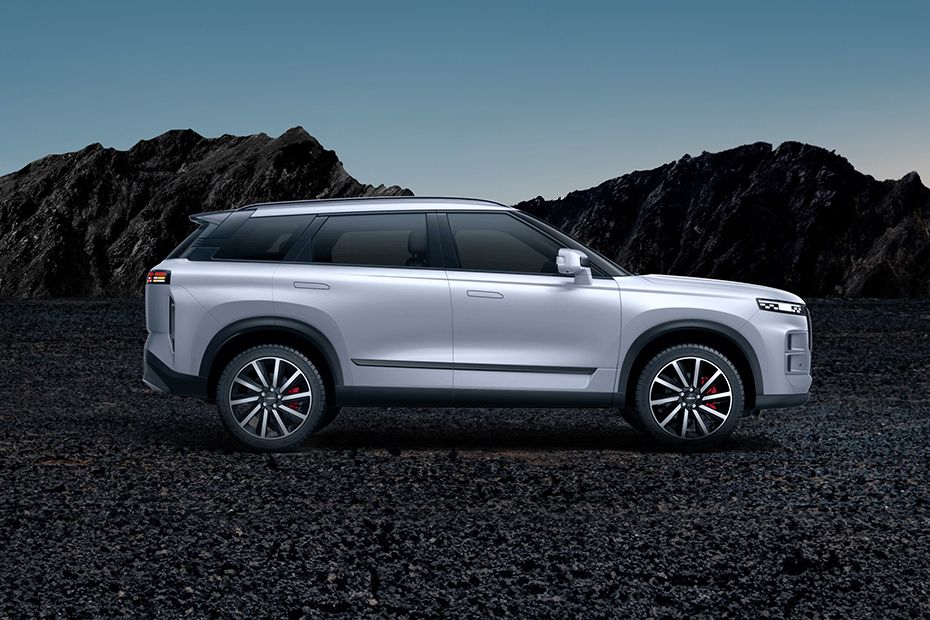
From around RM140,000, the J7 is the style pick of the Chinese brands, with a Range Rover Evoque-adjacent design, hidden door handles, a large portrait screen and a cabin that punches well above its price on perceived quality. The 412-litre boot is competitive, and the plug-in hybrid SHS variant is the genuinely interesting one, offering enough electric-only range to cover a typical daily commute while the petrol engine removes all range anxiety for weekend drives.
Road tax on the 1.6-litre turbo is RM90, which is a bargain for a car this size. The risks are the same as the Chery family it shares engineering with: unproven three-year resale, a service network concentrated in major cities, and a PHEV system that is more complex to maintain long term than a plain petrol engine. For an early adopter with a home charger and a Klang Valley postcode, it makes a strong case. For a buyer in a smaller town, the Toyota is still the safer call.
Best 7-Seater SUVs in Malaysia
Here is the comparison nobody at a dealership will give you straight.
| Model | Price from (RM) | Third row verdict | Boot with row 3 up | Road tax (RM/yr) |
|---|---|---|---|---|
| Perodua Aruz | ~73,000 | Children only, short trips | Minimal, a few shopping bags | 90 |
| Toyota Rush | ~98,000 | Children only, ageing design | Minimal | 90 |
| Proton X90 | ~124,000 | Teenagers fine, adults for short runs | 257L | 90 |
| Chery Tiggo 8 Pro | ~160,000 | Best of the four, adults tolerable | 193L | 90 |
The honest conclusion: none of these third rows is a place an adult will happily spend three hours. If you genuinely carry seven people daily, a Perodua Alza or Toyota Veloz will give you more usable space, easier third-row access, lower running costs and a lower purchase price than any seven-seat SUV here. Buy the SUV if you need the third row occasionally and want the ride height and road presence the rest of the time. Buy the MPV if row three is in daily use.
What an SUV Really Costs to Own in Malaysia
Price is the number on the banner. This is the number that hits your account every month. The table below assumes a 90 percent hire purchase over nine years at a representative 3.0 percent flat rate, 15,000km of annual driving, and a driver with maximum no-claim discount. Insurance figures are broad estimates only, because your premium depends on your NCD, your state and your sum insured.
| Model | Road tax (RM/yr) | Insurance estimate (RM/yr) | Service (interval / typical cost) | Fuel or charging (RM/yr) | Est. monthly instalment (RM) |
|---|---|---|---|---|---|
| Perodua Ativa (RM66,000) | 20 | 1,200 to 1,500 | 10,000km / RM200 to RM350 | ~1,950 | ~700 |
| Proton X50 (RM95,000) | 90 | 1,800 to 2,200 | 10,000km / RM250 to RM450 | ~2,550 | ~1,005 |
| Proton e.MAS 7 (RM106,000) | Exempt (CKD, reported to end 2027) | 2,200 to 2,800 | 20,000km / RM150 to RM300 | ~1,150 (home charging) | ~1,120 |
| Honda HR-V e:HEV (RM133,000) | 90 | 2,500 to 3,000 | 10,000km / RM350 to RM600 | ~1,500 | ~1,410 |
| Honda CR-V 1.5T (RM170,000) | 90 | 3,000 to 3,800 | 10,000km / RM400 to RM650 | ~2,700 | ~1,800 |
Worked example, so you can copy the method for any car. An RM120,000 SUV with a 10 percent deposit means an RM108,000 loan. At 3.0 percent flat over nine years, total interest is RM29,160, so you repay RM137,160 over 108 months, which is roughly RM1,270 a month. Add RM90 road tax, RM2,500 insurance and RM2,400 of fuel, and your true monthly cost is closer to RM1,685. Shorten the loan to seven years and the monthly jumps to roughly RM1,500 before running costs, but you pay around RM6,500 less interest overall.
Two things Malaysians routinely underestimate: road tax scales brutally once you cross 2,000cc, which is why a 2.5-litre CX-5 costs RM868 a year while a 1.5-litre turbo costs RM90, and tyres on an 18 or 19-inch SUV will cost RM2,000 to RM3,500 a set every four to five years.
Which SUVs Hold Their Value Best in Malaysia?
Resale is the single biggest hidden cost in Malaysian car ownership, and it is the reason a cheaper car is not always cheaper. Based on how the Malaysian used market currently behaves, here is the broad ranking of three-year value retention among our picks.
- Strongest: Perodua Ativa and Aruz, Honda HR-V and CR-V, Toyota Corolla Cross and Harrier
- Solid: Proton X50 and X70, Mazda CX-5
- Weaker: Nissan X-Trail, Proton X90
- Unproven, currently trending softer: Chery, Jaecoo, BYD and most new EV entrants
The drivers are consistent. Badge familiarity and parts availability reassure the next buyer. A nationwide service network means a used unit can be maintained anywhere. And a crowded pipeline of new launches from a brand suppresses its own used values, because why buy a two-year-old model when a newer, better equipped version is launching at a similar price.
The practical takeaway: if you change cars every three to four years, resale matters more than the RM8,000 discount you are being offered today. If you intend to keep the car for ten years and drive it into the ground, resale barely matters and you should buy on equipment and running cost instead.
New or Used SUV: Which Makes More Sense in 2026?
A three-year-old SUV in Malaysia typically sells for 60 to 70 percent of its original price, which means you get roughly 80 percent of the car for substantially less money. A three-year-old X70 or HR-V is mechanically broken in, usually still has some manufacturer warranty left, and has already taken its steepest depreciation hit.
The counterweights are financial. Used car loans carry higher interest rates than new car loans, often 1 to 2 percentage points more, and tenures are shorter, which raises the monthly payment more than buyers expect. The vehicle will need a Puspakom inspection for ownership transfer, and you inherit whatever the previous owner did or did not do.
What to check specifically on a used Malaysian SUV: flood damage signs, which means sniffing the carpets for mustiness, checking under the spare wheel well for silt and looking for corrosion on seat rails and under-dash connectors. Then suspension wear, because years of potholes and aggressive speed bumps punish bushings and absorbers. Then aircon performance at idle in full sun, because a weak compressor in Malaysian heat is a daily misery and an expensive fix. Finally, ask for the full service record from an authorised centre, not a stack of receipts from a neighbourhood workshop.
How to Choose the Right SUV for Malaysian Roads
Forget the brochure specs for a moment. These are the criteria that actually decide whether you like the car after six months.
- Ground clearance: aim for 180mm or more if you live anywhere prone to flash flooding or regularly drive kampung roads with high speed bumps. The Aruz at 220mm is the benchmark here.
- Width versus parking bays: older mall and shoplot bays in KL, Penang and JB are narrower than new developments. Anything over about 1,860mm wide becomes a daily irritation in Bangsar or Georgetown.
- Aircon performance: test the car parked in direct sun at 1pm, not at 9am. Rear vents matter if you carry children.
- Boot against a real load: picture your actual balik kampung load, which is usually two large cases, a cooler bag, durian or buah tangan and a stroller. If the car cannot take it without folding a seat, it is too small.
- ADAS behaviour in traffic: adaptive cruise that disengages below 30km/h is useless on the Federal Highway. Ask specifically whether the system has full stop-and-go.
- Service network in your state: count the authorised centres within 30km of your home, not nationwide.
- Child seat fit: bring your actual child seat to the test drive and check the ISOFIX anchor access and whether the front seat still has legroom with a rear-facing seat installed.
- Touch ‘n Go RFID clearance: trivial but real, check that the windscreen tint and sensor cluster leave a clean mounting spot.
On the test drive itself, insist on at least 30 minutes, and route it over a highway stretch, a stop-go urban crawl and a residential road with speed bumps. Ten minutes around the industrial estate behind the showroom tells you nothing.
ASEAN NCAP Safety Ratings Compared
| Model | ASEAN NCAP rating | AEB | Blind spot monitoring | Lane keep assist |
|---|---|---|---|---|
| Perodua Ativa | 5 stars | Yes, higher trims | Higher trims | Higher trims |
| Perodua Aruz | 5 stars | Yes | No | No |
| Proton X50 | 5 stars | Yes, higher trims | Higher trims | Higher trims |
| Chery Tiggo Cross | 5 stars | Yes | Yes | Yes |
| Proton X70 / X90 | 5 stars | Yes, higher trims | Higher trims | Higher trims |
| Honda HR-V / CR-V | 5 stars | Yes | Most variants | Yes |
| Toyota Corolla Cross | 5 stars | Yes | Higher trims | Yes |
| BYD Atto 3 | 5 stars | Yes | Yes | Yes |
| Proton e.MAS 7 | 5 stars | Yes | Yes | Yes |
| Mazda CX-5 | 5 stars | Yes | Higher trims | Higher trims |
One point Malaysian buyers routinely miss: a 5-star ASEAN NCAP result is awarded to a tested variant, and the safety assist score depends heavily on the equipment fitted to that variant. A base trim without AEB or blind spot monitoring is not the same car that earned the headline rating, even if the body structure is identical. Always check the specific variant’s equipment list rather than assuming the star count applies across the range. The ASEAN NCAP database publishes the tested variant for each result.
What Malaysian Owners Actually Say
These are recurring themes from Malaysian owner groups, Lowyat threads and r/kereta discussions, presented as owner sentiment rather than tested findings.
Perodua owners overwhelmingly praise cost of ownership and service accessibility, with the most common complaints being cabin noise, thin paint and CVT drone. Almost nobody reports being stranded, which is the point.
Proton owners report a clear generational split. Newer X50 and X70 units draw praise for equipment and driving feel, while the two persistent grumbles are infotainment responsiveness and service-centre waiting times at busy outlets. Parts cost and availability are consistently cited as strengths.
Honda and Toyota owners are the least vocal, which usually means the least troubled. The recurring theme is confidence in resale and parts, with service pricing at authorised centres being the main complaint.
Chinese brand owners are the most enthusiastic about equipment and the most anxious about the future. Common praise covers the screens, ADAS and perceived value. Common concerns cover software quirks requiring dealer updates, parts lead times for less common items, and uncertainty about what the car will be worth in 2029.
EV owners consistently report that the car is cheaper and nicer to live with than expected, and that the single factor separating happy owners from frustrated ones is whether they have home charging. Condo dwellers relying on public chargers are the most likely to regret the purchase.
Our Final Verdict: Which SUV Should You Buy?
If you are skimming, this is the only section you need.
- Budget caps at RM70,000 and you drive mostly in the city: Perodua Ativa, from around RM64,800.
- You need seven seats and cannot spend more than RM80,000: Perodua Aruz, from around RM73,000.
- You want the best balance of fun, kit and resale under RM120,000: Proton X50, from around RM86,000.
- You want maximum equipment per ringgit and live near a major city: Chery Tiggo Cross, from around RM85,000.
- You need a real third row under RM130,000: Proton X90, from around RM124,000.
- You plan to sell within three years: Honda HR-V, from around RM120,000.
- You want zero drama and strong trade-in value: Toyota Corolla Cross, from around RM137,000.
- You carry a full family plus luggage regularly: Honda CR-V, from around RM160,000. This is the overall pick, because nothing else in the price band combines that boot, that rear space and that resale strength.
- You drive 30,000km a year, mostly highway: Nissan X-Trail e-Power, from around RM180,000.
- You have a landed home with a charger and drive under 300km a week: Proton e.MAS 7, from around RM106,000.