
Best Assam Laksa in Penang: 10 Bowls to Try (2026)
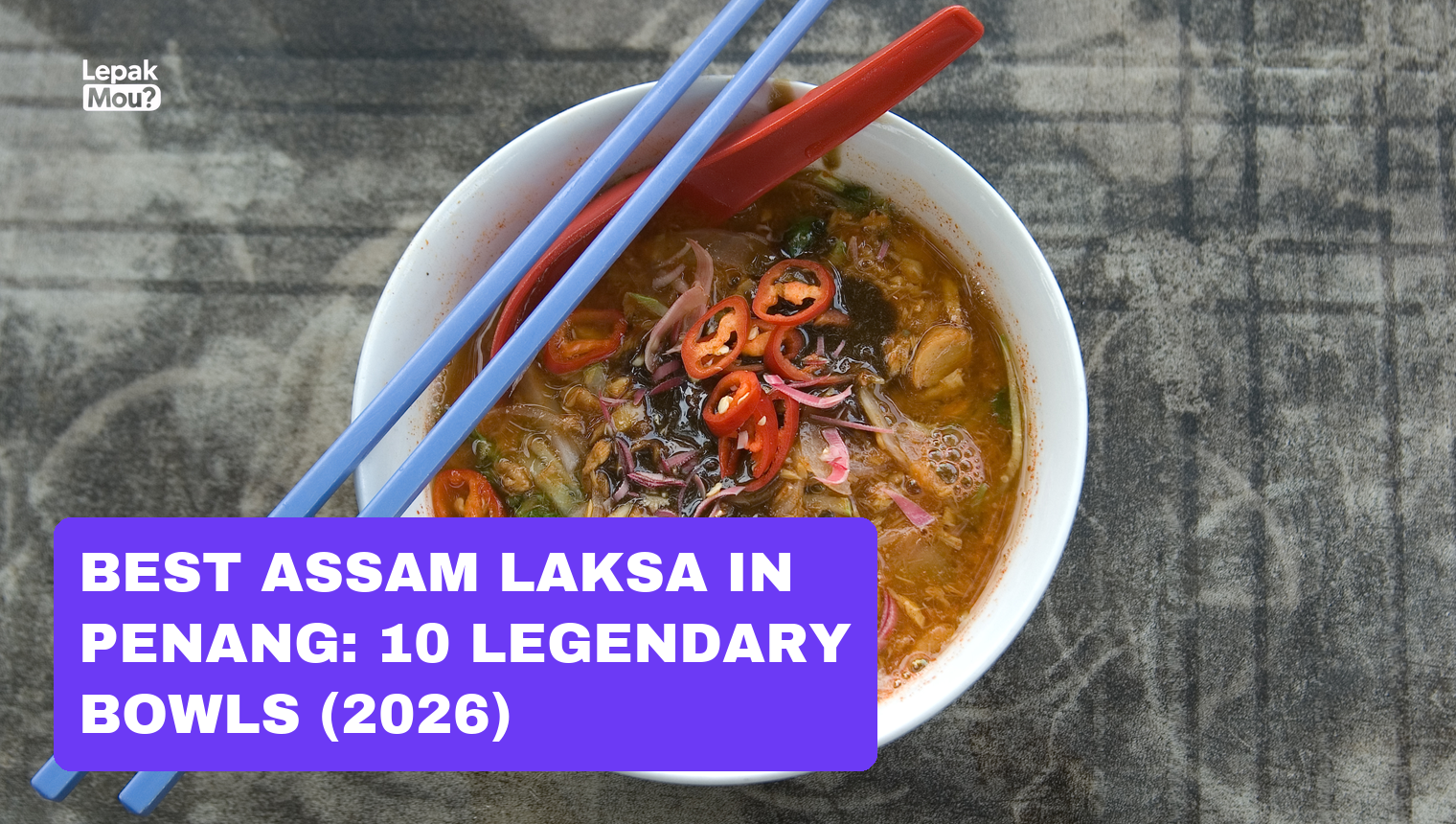
Ask any Penangite where to find the best assam laksa in Penang and you will get an argument, not an answer. Somebody will say Air Itam, somebody else will say the famous one on Penang Road, and an uncle at the next table will insist both are tourist traps and his neighbourhood market bowl beats them all. That argument has been running for decades and it is not ending in 2026.
So here is a straight, ranked shortlist of 10 assam laksa bowls across Penang island and the mainland, with prices in RM, typical opening hours, closed days, payment reality (a lot of these stalls are still cash only), and a Google Maps link for every single one so you are not wandering around Lebuh Keng Kwee wondering which queue is which.
Two things worth saying upfront. First, the famous names mostly still deliver, but not all of them are the best bowl on this list. Second, hawker hours in Penang move around. Stalls take irregular days off, markets close on fixed days, and popular stalls sell out early. Treat every time listed below as a guide and check before you make a special trip.
The 10 Best Assam Laksa Stalls in Penang at a Glance (2026)
If you only have time for one bowl, read this table and go. Prices are what you can generally expect to pay for a regular bowl of assam laksa in Penang in 2026.
| # | Stall | Area | Price (RM) | Typical hours | Closed | Payment | Best for |
|---|---|---|---|---|---|---|---|
| 1 | Penang Road Famous Laksa | George Town | 7.00 to 8.00 | ~11am to 7pm | Irregular | Cash | First-timers, laksa plus cendol |
| 2 | Joo Hooi Café | Jalan Penang | 7.00 to 8.00 | ~11am to 5pm | Irregular | Cash | One-table hawker feast |
| 3 | Lebuh Kimberley assam laksa | George Town | 6.00 to 7.50 | Evening | Varies | Cash | Late supper crawl |
| 4 | Pasar Cecil laksa | Lebuh Cecil | 5.50 to 7.00 | Morning to ~2pm | Mon (market day off) | Cash | Cheap locals’ bowl |
| 5 | Pasar Air Itam Laksa | Air Itam | 6.00 to 7.00 | ~10.30am to 6pm | Irregular | Cash | Heaviest hae ko finish |
| 6 | Nan Guang Coffee Shop | Balik Pulau | 6.00 to 7.50 | Morning to ~4pm | Mon (reported) | Cash | Thick, fishy kampung style |
| 7 | Pasar Batu Lanchang laksa | Batu Lanchang | 5.50 to 7.00 | Morning to early pm | Mon (market day off) | Cash | No tourist markup |
| 8 | Kedai Kopi Seow Fong Lye | Jalan Utama | 6.50 to 8.00 | Morning to afternoon | Varies | Cash | Sit-down comfort, aircon nearby |
| 9 | Pasar Pulau Tikus laksa | Pulau Tikus | 5.50 to 7.00 | Morning, sells out | Mon (market day off) | Cash | Early risers, market breakfast |
| 10 | Laksa Janggus | Sungai Dua, mainland | 6.00 to 8.00 | Late morning to evening | Varies | Cash | Mainland stop, assam or lemak |
Overseas readers: RM10 is roughly USD 2.20 or SGD 2.90 at the time of writing. Everything below is quoted in RM only, because that is what you will be handing over.
How We Rank These Assam Laksa Stalls
No stall on this list paid for placement, and none of them were contacted for a write-up. The ranking is based on what actually separates a good bowl from a great one in Penang, judged on five things:
- Broth depth and sourness. Real sourness should come from asam gelugor and tamarind, backed by boiled-down fish. Sour with no fish behind it is a fail.
- Fish quantity. Proper shredded ikan kembung through the bowl, not a token sprinkle on top.
- Noodle texture. Thick fresh laksa noodles with a bit of bounce, not mush that has been sitting in hot water since 9am.
- Garnish freshness. Crisp cucumber and onion, real mint, and shredded bunga kantan you can smell before you taste.
- Hae ko. The prawn paste should be thick, glossy and dark, and ideally stirred in fresh rather than pre-mixed hours ago.
What knocks a stall off the list: watery broth propped up with stock powder, fish that tastes reheated, wilted garnish, and pricing well above the going rate for no good reason. Hawker prices and hours in Penang change constantly, so use the details here as a starting point and confirm on the day.
What Is Assam Laksa? (And Why Penang Does It Best)
Assam laksa is a sour fish noodle soup from Penang, built on a tamarind and asam gelugor broth simmered with flaked ikan kembung (mackerel), served with thick rice laksa noodles and finished with a spoon of hae ko, a thick black prawn paste. It contains no coconut milk at all, which is the single thing most visitors get wrong.
A standard bowl is assembled from:
- Sour fish broth (tamarind, asam gelugor, chilli, lemongrass, torch ginger)
- Shredded boiled mackerel stirred through the soup
- Thick round white laksa noodles
- Shredded cucumber, red onion, pineapple, lettuce and daun kesum (Vietnamese mint)
- Bunga kantan (torch ginger flower), sliced fine
- Hae ko, added at the end or served on the side
Penang does it best for boring, practical reasons. The fish is local and cheap, the Nyonya kitchens of the Straits Chinese community refined the recipe over generations, and the competition between stalls is brutal enough that a lazy bowl does not survive. The dish is also a fixture on international lists. It has appeared repeatedly on CNN Travel‘s world’s best food rankings, and the MICHELIN Guide has covered Penang’s Bib Gourmand hawker scene in detail, with assam laksa treated as a benchmark dish rather than a novelty.
One more thing. Assam laksa is not gentle. It is sour first, fishy second, spicy third, and the hae ko brings a funky, salty depth that some people love instantly and others need a few spoonfuls to come around to. If you have never had it, order one bowl between two before committing.
Assam Laksa vs Curry Laksa vs Other Malaysian Laksa
The difference is the broth. Assam laksa uses a tamarind-soured fish broth with no coconut milk, so it tastes sharp, savoury and funky. Curry laksa (laksa lemak) uses a coconut milk curry base with chicken, prawns or tofu puffs, so it tastes rich and creamy. Same word, completely different bowls.
| Laksa type | Broth base | Coconut milk | Main protein | Noodles | Dominant flavour |
|---|---|---|---|---|---|
| Assam laksa (Penang) | Tamarind and asam gelugor fish broth | No | Shredded mackerel | Thick rice laksa noodles | Sour, fishy, funky |
| Curry laksa / laksa lemak | Curry and coconut | Yes | Chicken, prawn, tofu puffs | Yellow noodles and bee hoon | Rich, creamy, spiced |
| Sarawak laksa | Sambal, coconut, tamarind | Yes | Prawn, shredded chicken, omelette | Bee hoon | Aromatic, herbal, medium rich |
| Johor laksa | Fish gravy with rempah and coconut | Yes | Mackerel or ikan parang | Spaghetti | Thick, nutty, fish-heavy |
| Katong laksa (Singapore) | Coconut prawn broth | Yes | Prawn, cockles, fishcake | Short-cut thick bee hoon | Creamy, prawny, eaten with a spoon |
If you know you dislike sour food, be honest with yourself and order curry laksa instead. Nobody is winning any prizes for forcing down a bowl they hate. Visitors coming up from across the Causeway who want the coconut version should note it is a different tradition entirely, closer to the thick Katong-style bowls than to anything in George Town.
1. Penang Road Famous Laksa, Lebuh Keng Kwee
This is the bowl most visitors eat, and unlike a lot of famous hawker names, it has held its standard. The laksa stall sits beside the permanently queueing cendol operation on Lebuh Keng Kwee, just off Jalan Penang, and the two are ordered separately even though they share the same alley and the same crowd.
The broth here is balanced rather than aggressive. Sour up front, decent fish body, and a hae ko finish that is present without drowning the bowl. Fish quantity is consistently generous, which is exactly what most touristy stalls cut back on first. Garnish is cut fresh through the day, and the bunga kantan actually smells like bunga kantan. Pair it with a cendol from the neighbouring stall. The cold coconut and gula melaka after a sour bowl is the whole point of eating here.
Honest downside: it is the most tourist-heavy bowl on this list, seating is cramped plastic stools, and at 1pm on a weekend you can easily wait 15 to 20 minutes for laksa and another 20 for cendol. The broth is also milder than the market stalls further out. Purists will find it too polite.
- Address: Lebuh Keng Kwee, off Jalan Penang, 10100 George Town, Penang
- Google Maps: Penang Road Famous Laksa, Lebuh Keng Kwee
- Hours: roughly 11am to 7pm daily, with irregular days off
- Price: around RM7 to RM8 a bowl, cendol around RM4.50 to RM5.50
- Payment: cash, bring small notes
- Peak wait: 15 to 20 minutes around noon to 2pm
Verdict: the most reliable good bowl in the city centre, and the easiest one to fit into a George Town walking day.
Best Assam Laksa in George Town (Walkable Picks)
These next three sit inside the George Town heritage zone, all within a short walk or a RM6 to RM9 Grab ride of Komtar and Chulia Street. If you are staying anywhere between Lebuh Chulia and Jalan Penang, you can hit all of them on foot across a single day, morning to night, without ever getting into a car.
2. Joo Hooi Café, Jalan Penang
Joo Hooi is the old-school kopitiam model in its purest form. Several independent hawkers operate out of one shop, you sit at a shared marble-top table, and different uncles come and take orders for different dishes. The standard move is assam laksa plus char koay teow plus a cendol, all landing on the same table from three different vendors.
The laksa here leans sourer and sharper than the Penang Road version, with a slightly thinner broth but a clean fish flavour and plenty of shredded mackerel. Hae ko is generous. The trick is knowing that ordering is stall by stall, so tell the laksa uncle what you want and settle up separately with each vendor. It moves fast, but tables are shared and there is no lingering culture here at lunch.
Honest downside: the shop gets uncomfortably hot by midday, the laksa stall can sell out well before official closing, and the shared-table shuffle confuses first-timers. Do not expect service, expect efficiency.
- Address: 475 Jalan Penang, 10000 George Town, Penang
- Google Maps: Joo Hooi Café, Jalan Penang
- Hours: roughly 11am to 5pm, with irregular closures
- Price: around RM7 to RM8 for laksa
- Payment: cash
- Peak wait: 10 to 15 minutes, plus seat hunting at 12.30pm
Verdict: the best bowl in town if you want a full hawker spread in one sitting, and it is three minutes’ walk from the Penang Road cendol queue.
3. Lebuh Kimberley Assam Laksa, George Town
Lebuh Kimberley is George Town’s night food street, and the assam laksa here is your evening option when the daytime stalls have all shut. The street runs off Lebuh Cintra and fills up from late afternoon with koay teow th’ng, duck kway chap, oyster omelette and pushcart dessert stalls, so nobody comes here for one dish only.
The laksa is a solid neighbourhood-standard bowl rather than a destination one. Broth is moderately thick, chilli is pushed a little harder than the daytime stalls, and the hae ko usually comes stirred in rather than served separately, so say something early if you want it on the side. Portions are honest and prices sit below the Jalan Penang stalls.
Honest downside: stall line-ups on Kimberley change over time and not every operator is open every night, so this is a spot to walk to rather than plan a taxi around. Parking on the street is close to impossible after 6pm.
- Address: Lebuh Kimberley, near the Lebuh Cintra junction, 10100 George Town, Penang
- Google Maps: Assam laksa stalls, Lebuh Kimberley
- Hours: evening trade, generally from around 5pm or 6pm until late
- Price: around RM6 to RM7.50
- Payment: cash
- Peak wait: 5 to 15 minutes, worst between 7pm and 9pm
Verdict: not the best laksa in Penang, but easily the best one available at 8pm within walking distance of Chulia Street.
4. Pasar Cecil (Cecil Street Market) Assam Laksa
Pasar Cecil is a proper working wet market with a hawker section upstairs and around it, and the crowd is overwhelmingly local. This is where you go when you want to see what Penangites actually pay for laksa when nobody is charging a heritage-zone premium.
The bowl is straightforward and unfussy. Sour, fish-forward, noodles on the softer side, garnish chopped that morning. What you notice is the price against the portion. It is also worth arriving hungry because the surrounding stalls do char koay kak, loh bak, koay teow th’ng and apom, and the whole floor shuts down by early afternoon.
Honest downside: the market traditionally takes a weekly day off (commonly Monday) and individual stalls close earlier than the market itself. Turn up at 2.30pm and you are eating somewhere else. Seating is basic and the market is hot by 11am.
- Address: Pasar Cecil, Lebuh Cecil, 10300 George Town, Penang
- Google Maps: Pasar Cecil, Lebuh Cecil
- Hours: morning until around 2pm, earlier if stock runs out
- Price: around RM5.50 to RM7
- Payment: cash
- Peak wait: under 10 minutes most days
Verdict: the best value bowl inside George Town, as long as you can get yourself there before lunch ends.
Beyond George Town: Air Itam, Balik Pulau and the Suburbs
These next five bowls need a Grab or a car. Air Itam is 15 to 25 minutes from George Town depending on traffic, with Grab fares generally in the RM12 to RM20 range. Balik Pulau is a 40 to 50 minute drive over the hill, and Grab one way typically lands somewhere around RM35 to RM50. Both are worth it, and both are better paired with something else in the area, Kek Lok Si and Penang Hill for Air Itam, the coastal loop and durian stalls for Balik Pulau.
5. Pasar Air Itam Laksa
The stall beside the steps at Pasar Air Itam is the bowl most locals name when the argument starts. It has been feeding the market crowd and the Kek Lok Si pilgrims for decades, and it is still the most intense assam laksa on this list.
The broth hits sour first, then lands with a thick, almost tarry hae ko finish that coats the spoon. Fish content is heavy and the soup has real body rather than sharpness alone. Portions are modest, which is why locals often order two. Seating is a handful of stools and a lot of standing around, bowls move fast, and you eat facing the market traffic. That is the experience, not a flaw.
Honest downside: hours are approximate at best and the stall is known to take unannounced days off, so a wasted trip is a genuine risk. It is also cash only, cramped, and the standing-room setup is hard work in the midday heat.
- Address: Pasar Air Itam, Jalan Pasar, 11500 Air Itam, Penang (beside the market steps)
- Google Maps: Pasar Air Itam Laksa, Jalan Pasar
- Hours: roughly 10.30am to 6pm, irregular closures
- Price: around RM6 to RM7
- Payment: cash
- Peak wait: 10 to 20 minutes on weekends and public holidays
Verdict: the thickest, most old-school bowl in Penang. If you want to understand what hae ko is actually for, eat this one.
6. Nan Guang Coffee Shop, Balik Pulau
Nan Guang is the reason people drive across the island. It is an unhurried kampung kopitiam on the main road through Balik Pulau town, with ceiling fans, old tiles and a laksa stall that has built a following well beyond its postcode.
The Balik Pulau style is thicker and fishier than the George Town bowls, less sweet, with a rougher texture to the broth from all the shredded mackerel in it. Sourness is present but it plays second to the fish. It is the bowl people describe as “heavy”, and that is meant as a compliment. Order the laksa with a kopi peng and sit for a while, because you did not drive 45 minutes to rush.
Honest downside: it is widely reported to close on Mondays and it runs on morning to afternoon hours, so an evening trip is pointless. Durian season traffic on the Balik Pulau roads can add serious time to the drive, and parking along the main road is tight on weekends.
- Address: Jalan Balik Pulau, 11000 Balik Pulau, Penang
- Google Maps: Nan Guang Coffee Shop, Balik Pulau
- Hours: morning until around 4pm, commonly closed Mondays
- Price: around RM6 to RM7.50
- Payment: cash
- Peak wait: 10 to 20 minutes on weekend mornings
Verdict: the best bowl outside the city, and the only one on this list where the drive is genuinely part of the recommendation.
7. Pasar Batu Lanchang Assam Laksa
Batu Lanchang market is a residential-area pasar serving Jelutong, Green Lane and Gelugor, and the laksa stall inside is a pure neighbourhood bowl with zero tourist pricing. If you are staying around Green Lane or Gelugor and cannot face driving into George Town for lunch, this is your answer.
Expect a clean, sour, well-fished broth, soft thick noodles, and a hae ko that is stirred in without ceremony. Nothing here is styled for photographs. The market also does a strong morning spread of nasi lemak, koay teow th’ng and kuih, so go hungry and eat around.
Honest downside: morning hours only in practice, the stall can sell out before the market closes, and like most Penang pasars it takes a weekly rest day (commonly Monday). Parking around the market fills up early.
- Address: Pasar Batu Lanchang, Jalan Batu Lanchang, 11600 Jelutong, Penang
- Google Maps: Pasar Batu Lanchang, Jelutong
- Hours: morning to early afternoon
- Price: around RM5.50 to RM7
- Payment: cash
- Peak wait: usually under 10 minutes
Verdict: a proper locals’ bowl at a locals’ price, and the easiest stop on this list if you are based in the southern suburbs.
8. Kedai Kopi Seow Fong Lye, Jalan Utama
Seow Fong Lye on Jalan Utama, in the Island Glades area, is a long-running kopitiam that locals associate with two dishes above all others, assam laksa and hokkien mee. It sits away from the heritage-zone crowds, which means you can usually get a table and eat sitting down like a civilised person.
The laksa is tuned slightly sweeter and rounder than the market bowls, with a smooth broth, generous fish and a strong bunga kantan aroma. It is the most comfortable bowl on this list to eat, and a good introduction for anyone who found Air Itam’s hae ko too aggressive. Order the hokkien mee as well and you have a complete Penang noodle lesson in one sitting.
Honest downside: it is not a heritage-postcard setting and there is nothing else touristy nearby, so it only makes sense if you are already on that side of town or willing to Grab out (roughly RM10 to RM15 from George Town).
- Address: Jalan Utama, Island Glades, 11700 Gelugor, Penang
- Google Maps: Kedai Kopi Seow Fong Lye, Jalan Utama
- Hours: morning through afternoon, closing times vary by stall
- Price: around RM6.50 to RM8
- Payment: cash
- Peak wait: 10 minutes, longer on weekend mornings
Verdict: the most comfortable good bowl in Penang, and the one to pick if you are travelling with someone who hates queueing in the sun.
9. Pasar Pulau Tikus Assam Laksa
Pasar Pulau Tikus is a morning market with a hawker line-up that locals rate highly and most visitors never reach, despite it being a 10 minute drive from George Town. The assam laksa here is a breakfast-hours bowl in the truest sense. Come at 8am or 9am and you are eating with the market crowd, come at noon and you are probably too late.
The bowl is mid-thickness, sharply sour, with the kind of fresh garnish you only get when the stall is standing inside the market it buys from. Prices are market prices. While you are there, the nyonya kuih stalls and the popiah are worth a detour on their own.
Honest downside: the early sell-out is real, the market takes a weekly rest day (commonly Monday), and the parking situation on Jalan Pasar in the morning is a genuine test of patience. Grab drop-off is far easier than driving.
- Address: Pasar Pulau Tikus, Jalan Pasar, 10350 Pulau Tikus, Penang
- Google Maps: Pasar Pulau Tikus, Jalan Pasar
- Hours: early morning until stock runs out, generally before noon
- Price: around RM5.50 to RM7
- Payment: cash
- Peak wait: short, but the queue is at 8.30am not 1pm
Verdict: the best assam laksa breakfast in Penang, and the bowl most visitors will never eat because they were still asleep.
On the Mainland: Butterworth, Bukit Mertajam and Seberang Perai
Every island-only laksa guide ignores the fact that half of Penang state lives on the mainland, and that plenty of people arrive by train or bus at Penang Sentral in Butterworth, or drive up the highway and cross the second bridge. Mainland bowls tend to be a little cheaper, often thicker, and sometimes sweeter than island versions. Bukit Mertajam and Butterworth both have solid coffee shop laksa stalls, but one name travels further than the rest.
10. Laksa Janggus, Sungai Dua
Laksa Janggus in Sungai Dua, Seberang Perai, is the mainland’s most famous laksa address, named for the cashew (janggus) trees the original stall operated under. It is a rustic open-air setup off the main road, and people drive out from Butterworth and Bukit Mertajam specifically for it.
The house move is ordering assam laksa and then having coconut milk added, turning it into a laksa lemak hybrid. Purists will tell you that is heresy. Try the plain assam version first, because the broth is genuinely good on its own, thick with fish and firmly sour, then order a second bowl with santan if you are curious. It is the kind of place where people order three bowls between two and argue about which was better.
Honest downside: it is a drive from anywhere, the setting is open-air and hot, and it only makes sense if you are already on the mainland or heading north on the highway. Weekend crowds fill the place out.
- Address: Sungai Dua, Seberang Perai Utara, Penang (off the main Sungai Dua road, signposted locally)
- Google Maps: Laksa Janggus, Sungai Dua
- Hours: late morning through evening, check before a special trip
- Price: around RM6 to RM8, extra for santan or add-ons
- Payment: cash
- Peak wait: 15 minutes or more on weekends
Verdict: the mainland bowl worth planning around, and the easiest good laksa to hit before or after a Penang Sentral transfer.
What Makes a Great Bowl of Assam Laksa
Four things separate a great bowl from a forgettable one, and once you know them you can judge any stall in Penang yourself.
The broth. Proper sourness comes from asam gelugor (dried sour fruit slices) and tamarind, not from a splash of vinegar or a scoop of sour powder. Underneath that, the soup should carry the weight of fish boiled down into it. If you taste sour and nothing else, the stall has skipped the hard part.
The fish. Ikan kembung is boiled, deboned and shredded back into the pot, so the flesh should be suspended right through the bowl, not just decorating the top. A good stall will let you pay a couple of ringgit more for extra fish. A lazy one will not have any spare.
The noodles. Thick, fresh, round white laksa noodles with a slight chew. If they break apart when you lift them, they have been sitting in hot water too long.
The garnish and hae ko. Bunga kantan is non-negotiable and you should smell it before you taste it. Cucumber and onion should be crisp, mint should be perky, pineapple should still have acidity. The hae ko should be thick and glossy, dark like molasses, and ideally added fresh so you can stir it in yourself.
Quick red flags you can spot before your first mouthful: a bright orange oil slick on the surface (too much chilli oil covering a weak broth), garnish that has gone limp in the tray, noodles pre-portioned into bowls and waiting, and a hae ko jar that has been sitting out uncovered all morning.
Is Assam Laksa Halal? Plus Vegetarian, Allergy and Spice Notes
Assam laksa contains no pork in its recipe. It is fish, tamarind, chilli and vegetables. However, most of Penang’s famous assam laksa stalls operate inside Chinese kopitiams and wet markets where other stalls sell pork dishes, so the premises are generally not halal-certified even when the laksa itself is pork-free.
That distinction matters. Pork-free is not the same as halal-certified, and the only reliable way to confirm certification is a valid certificate from JAKIM’s Halal Malaysia displayed at the outlet. Of the 10 picks in this guide, all sit in kopitiams, markets or open-air hawker settings rather than certified halal premises, so if certification is a requirement for you, treat this list as a reference and check on the day. Malaysian chains such as Ah Cheng Laksa, which operates in Penang shopping malls including the Gurney and Queensbay areas, are the more practical option for diners who need certification, and Penang’s nasi kandar and Malay food scene is enormous if you would rather eat somewhere unambiguous.
Shellfish allergy warning. Hae ko is a fermented prawn paste. If you have a shellfish allergy, this is a serious issue, and the prawn paste is often already stirred into the bowl before it reaches you. Say it when you order: “tanpa hae ko” or “no prawn paste”. Ask for it on the side if you just want to control the amount.
Vegetarian. Realistically, no. The entire broth is built on boiled mackerel, and removing the hae ko does nothing about that. A handful of vegetarian restaurants make a mock version, but it is a different dish and you will not find it at any of the stalls above.
Spice level. Assam laksa is moderately spicy, not brutal. Chilli is adjustable at most stalls if you ask for “kurang pedas”. The sourness, on the other hand, is baked into the broth and cannot be dialled down, so that is the thing to prepare for.
Assam Laksa Prices in Penang (2026)
A fair price for a regular bowl of assam laksa in Penang in 2026 is RM5.50 to RM8. Market and neighbourhood stalls sit at the lower end, heritage-zone stalls at the upper end. Anything above RM10 for a standard bowl at a hawker stall is tourist pricing, and you should expect a very good reason for it.
| What you are buying | Typical price (RM) | Value verdict |
|---|---|---|
| Market or neighbourhood bowl | 5.50 to 7.00 | Best value on the island |
| George Town heritage-zone bowl | 7.00 to 8.00 | Fair for the location |
| Extra fish | +1.00 to 2.00 | Worth it almost everywhere |
| Extra noodles | +1.00 to 1.50 | Order a second bowl instead |
| Tapau container | +0.30 to 1.00 | Standard, bring your own if you can |
| Cendol on the side | 4.50 to 6.00 | Non-negotiable after a sour bowl |
| Café or mall assam laksa | 12.00 to 20.00 | Skip unless you need aircon |
For overseas readers: RM10 is roughly USD 2.20 or SGD 2.90 at the time of writing.
Payment reality: most of the stalls in this guide are still cash only. A growing number of Penang hawkers display a DuitNow QR code, but it is not something to rely on, and a market auntie at 8am will not appreciate you trying to break a RM100 note for a RM6 bowl. Carry RM10 and RM5 notes and coins, and assume cash unless you see the QR stand on the counter.
Best Time to Visit, Queues and Insider Tips
The single most useful thing to know about eating assam laksa in Penang is that timing beats everything. A great stall at the wrong hour is a closed shutter.
- Market stalls (Cecil, Batu Lanchang, Pulau Tikus): go between 8am and 11am. By 1pm the ingredients and the energy are both gone.
- George Town street stalls (Penang Road, Joo Hooi): 11am to 12pm, or after 3pm. The 12.30pm to 2pm window is the worst of the crowd.
- Kimberley Street: evening only, best around 6pm before the supper rush thickens.
- Air Itam and Balik Pulau: late morning. Both are unpredictable in the late afternoon and Balik Pulau is a wasted drive after 4pm.
| Situation | What to expect | What to do |
|---|---|---|
| Weekday lunch, George Town | 10 to 20 min wait | Arrive 11.15am |
| Weekend lunch, Penang Road | 20 min laksa, 20 min cendol | Split up and queue both at once |
| Public holidays and CNY | Many stalls shut for days | Assume closed, plan a backup |
| School holidays | Long queues everywhere | Eat before 11am |
| Rainy afternoon | Street stalls may pack up early | Head for a kopitiam instead |
A few ordering tips that will make you look less lost. Ask for “hae ko lain” if you want the prawn paste on the side. Ask for extra bunga kantan if you like that floral bite, most stalls will oblige for free. Say “kurang pedas” for less chilli and “tambah ikan” for extra fish. If you want takeaway, say “tapau”, and expect the soup and garnish to be packed separately at better stalls.
Parking in George Town is the other thing that ruins trips. On-street bays around Jalan Penang and Lebuh Chulia fill up by mid-morning and require the MBPP parking app or coupons. Use the Komtar or Prangin Mall car parks and walk, or just Grab in. For Air Itam, park at the Kek Lok Si car parks and walk down to the market rather than circling Jalan Pasar.
A Half-Day and Full-Day Penang Laksa Crawl Route
Two routes, depending on how much time you have and whether you have a car.
Route A: George Town walking morning (3 to 4 hours, no car needed). Start at Pasar Cecil around 9am for the cheap bowl and a plate of char koay kak. Walk 15 minutes north to Jalan Penang and hit Joo Hooi around 11am for the second bowl plus char koay teow from the neighbouring stall. Finish three minutes away at Lebuh Keng Kwee with the Penang Road laksa and a cendol to cool off. Total walking, around 25 minutes. Total spend, roughly RM40 to RM55 for two people including drinks.
Route B: Full island day by car or Grab (6 to 8 hours). Leave George Town by 9.30am, drive 20 minutes to Air Itam. Eat at Pasar Air Itam Laksa around 10.30am when it opens, then walk up to Kek Lok Si or take the Penang Hill funicular from the nearby station. Back in the car by 1pm and drive 45 minutes over the hill to Balik Pulau for Nan Guang, arriving before its afternoon close. Loop back via the coastal road through Teluk Bahang and Batu Ferringhi for a late afternoon coffee and a swim.
One warning. Do not eat three bowls of assam laksa in a single sitting. The sourness and the hae ko accumulate fast and by bowl three you will have stopped tasting anything. Space them out by at least 90 minutes, and put something neutral in between, a kopi, a cendol, a plate of popiah.
During durian season, roughly June to August, the Balik Pulau roads get heavy with weekend traffic. Budget an extra 30 minutes in each direction, and console yourself by stopping at a roadside durian stall on the way back.
What Penangites Actually Argue About
Three debates come up every single time this topic surfaces in a Penang food group, and none of them will ever be settled.
Air Itam versus Penang Road. The Air Itam camp says Penang Road is a tourist queue with a polite broth. The Penang Road camp says Air Itam is inconsistent and closes whenever it feels like it. Both are partly right. Air Itam has the heavier, more characterful bowl, Penang Road has the more reliable one.
Thick and fishy versus light and sour. Balik Pulau style is dense and mackerel-heavy, George Town style is sharper and cleaner. This is genuinely a matter of taste, not quality, and anyone claiming otherwise is defending their childhood.
Are the famous names now tourist traps? Prices at the heritage-zone stalls have climbed faster than at the markets, and that annoys people. But the food at the top famous stalls has not fallen off in any obvious way. Paying RM8 instead of RM6 for a bowl you can walk to from your hotel is not a scam, it is a location premium.
Our position, for what it is worth: the market bowls are better value, the famous bowls are better bets, and anyone who eats only one of the two is missing half of Penang.
Frequently Asked Questions About Assam Laksa in Penang
The Verdict: Which Bowl Should You Eat First?
If you only get one bowl in Penang, eat at Penang Road Famous Laksa on Lebuh Keng Kwee and follow it with a cendol from the stall beside it. It is the most consistent good bowl in the city and the easiest to slot into a George Town walking day.
If you want the bowl Penangites actually argue for, go to Pasar Air Itam Laksa in the late morning and accept that it might be shut. That hae ko finish is what this dish is supposed to taste like.
And if you are watching your ringgit, head to any of the market stalls, Cecil, Batu Lanchang or Pulau Tikus, before noon. RM6 gets you a bowl that would cost double in a café with worse fish in it.
One last reminder, and it is the one that saves trips: bring cash, go early, and never assume a Penang hawker stall is open just because it says so online.