
Pulau Ubin Tour Guide: Things to Do, Ferry, Tips & Hidden Gems
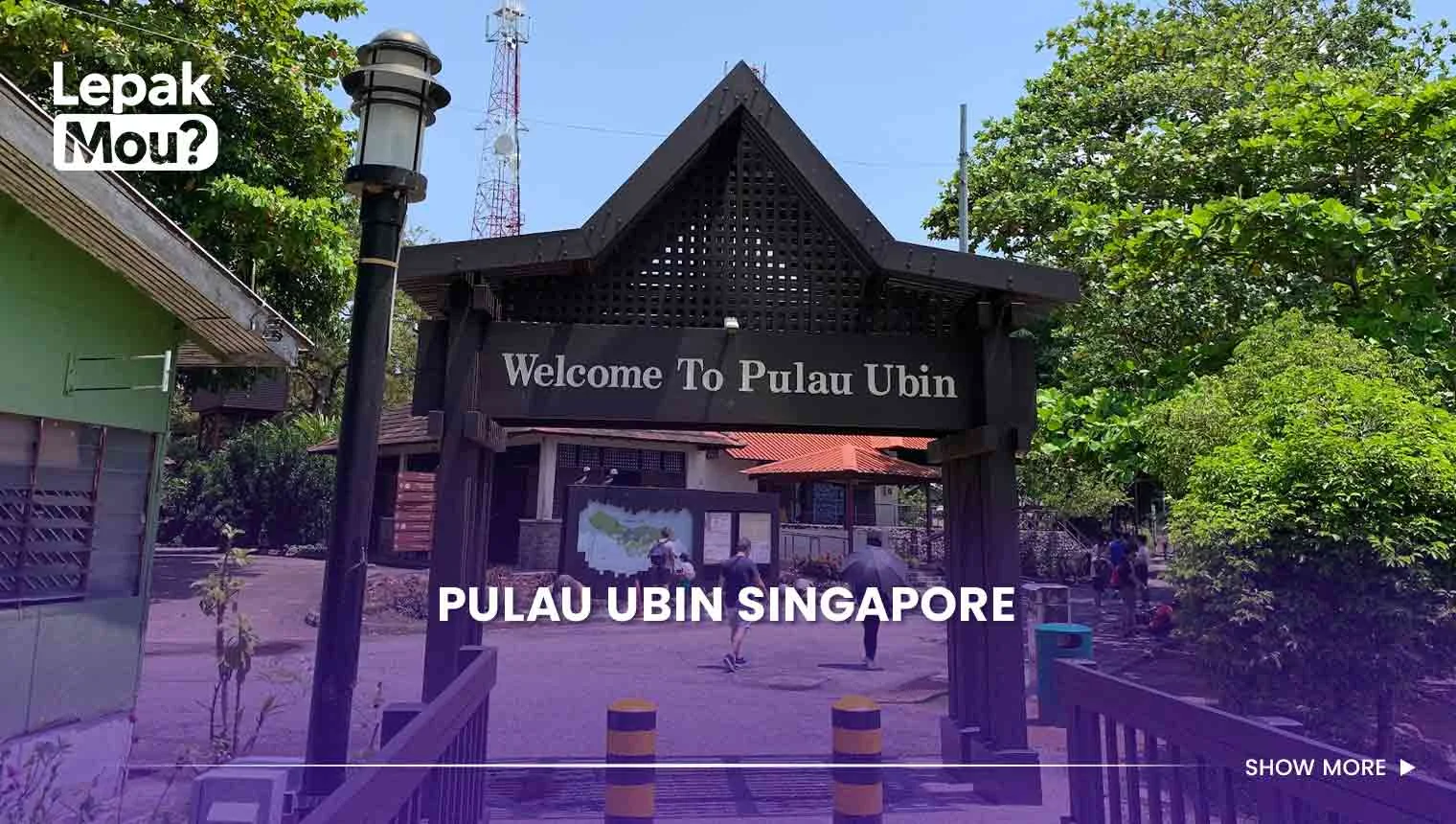
Whenever I need a break from the constant rush of city life, I head to Pulau Ubin.
On this island, time slows down. Bicycles replace buses, lush greenery stretches all the way to the sea, and the quiet charm of a simpler past still lingers.
It’s Singapore’s last surviving kampong, a place where traditions, nature, and stories that have nearly disappeared elsewhere are still alive. And it’s just a short ferry ride from the mainland.
This guide is here to make your visit easy and stress-free. You will learn how to get there, what to bring, and how to explore the island with confidence.
From ferry tips and packing lists to hidden spots and local stories, everything you need is in one place. Having spent many quiet mornings and slow afternoons on the island, Pulau Ubin always offers something new if you take your time and stay curious.
About Pulau Ubin
Fun fact: Pulau Ubin was once home to granite quarries that supported thousands of workers long ago. When the quarries finally surrendered to nature, they flooded into mirror-like lakes, and vines and forests returned.
Another fun fact: Pulau Ubin was once five separate islets. What was separated has combined to become a 1,020-hectare, boomerang-shaped island you can explore today.
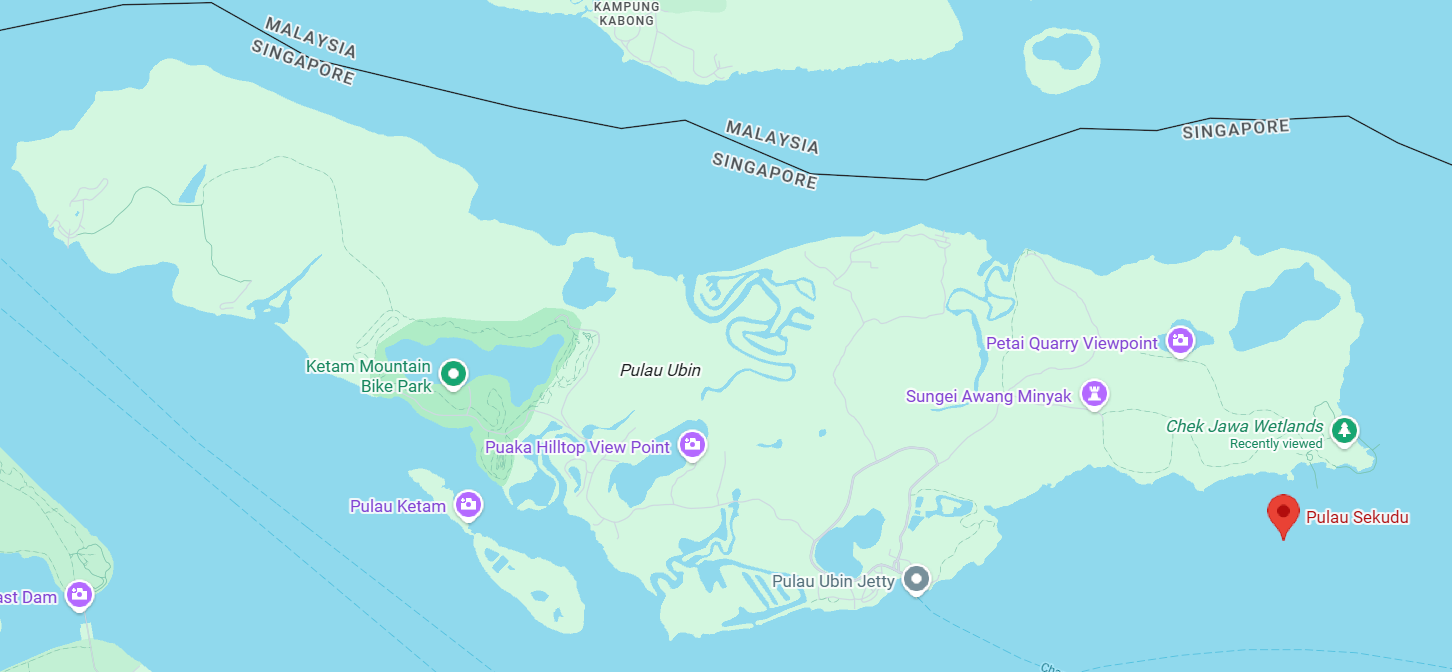
Two smaller islands nearby are Pulau Ketam (Crab Island) and Pulau Sekudu (Frog Island).
How to Go to Pulau Ubin
Your journey to Pulau Ubin begins at Changi Point Ferry Terminal, located on the eastern side of Singapore. Then, you will ride a bumboat to reach the island.
To get to the Changi Point Ferry Terminal, there are two options.
By MRT/LRT.
- Take the MRT to Tanah Merah (EW4)
Hop on the East-West Line (Green Line) and get off at Tanah Merah MRT Station. Once you arrive, look for Exit B. This is where you’ll find the bus stops to continue your journey to Changi Point. - Catch Bus 2 to Changi Village
From Exit B, take Bus 2 heading towards Changi Village Bus Terminal. Stay on the bus until it reaches the Changi Village Bus Interchange. The ride is comfortable and gives you a glimpse of the neighborhood along the way. - Walk to the Ferry Terminal
After getting off the bus, it’s now a 3 to 5-minute walk to Changi Point Ferry Terminal. Follow the signs, enjoy the sea breeze, and you’ll soon see the bumboats waiting to take you to Pulau Ubin.
Don’t forget to check bus schedules so you can plan your timing perfectly.
By Car
Taxis and ride-hailing services are also a convenient choice, especially if you are traveling in a group or carrying supplies.
For those who prefer to drive, parking options near the ferry terminal are available for a small fee, though spaces can fill up on weekends and public holidays.
I mostly choose Changi Village Public Car Park 1 or 2. They are the closest to the ferry terminal (~180m or 1 minute walk).
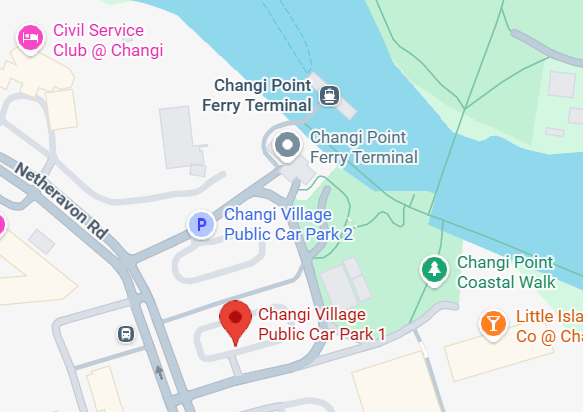
It charges approximately S$0.60 per 30 minutes for short‑term parking. That rate applies on weekdays, Saturdays, Sundays, and Public Holidays from about 7 am to 10 pm.
The ride to Pulau Ubin is part of the adventure. Traditional bumboats operate daily and take about 10 to 15 minutes to reach the island.
Tickets are purchased directly at the terminal and are cash only, so be sure to bring small notes. Boats usually depart once they have enough passengers, so waiting times can vary.
During peak hours, such as weekends and school holidays, you may wait longer. On quieter mornings, the boat often leaves quickly.
Tips for a Pulau Ubin Ferry Timing
- Start your day early and aim for the first ferry around 6 AM. Mornings are cooler, the island is quieter, and popular areas like Chek Jawa are far less crowded.
- Always check the timing of the last ferry back to Changi Point Ferry Terminal so you can explore without rushing and leave the island stress-free.
Pulau Ubin Ferry Ticket Price
- The bumboat ride from Changi Point Ferry Terminal to Pulau Ubin costs about S$4 for each person for a one-way trip.
- If you are bringing a bicycle, there is usually an extra charge of about S$2 per bike each way.
- Payment is cash only, and most boats leave when there are around 12 passengers ready.
Refer to official updates from the Singapore Tourism Board and National Parks Board for the latest information on ferry operations, trail access, and conservation guidelines.
Getting Around Pulau Ubin: Exploring the Island’s Heart
Once you arrive on Pulau Ubin, getting around is simple and part of the fun. The island is small, quiet, and best explored at a relaxed pace.
Cycling Around the Island
Cycling is the most popular way to see Pulau Ubin, and for good reason. It lets you cover more ground while still enjoying the scenery. You will find several bike rental shops right next to the jetty, so you can pick one as soon as you arrive.
There are different types of bikes available. You can choose from basic single-speed bikes, geared mountain bikes for rough paths, tandem bikes for couples, and even smaller bikes for kids.
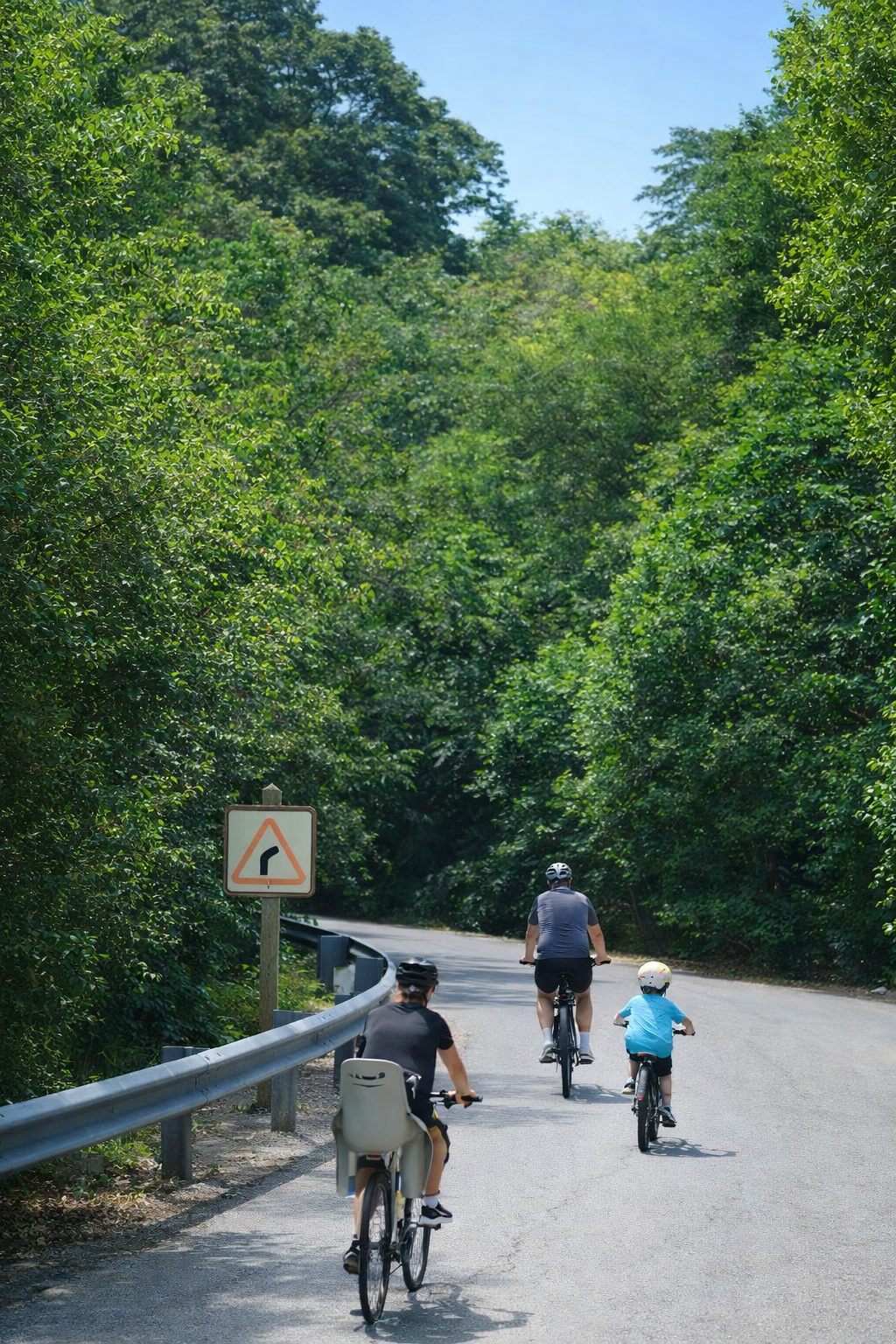
Prices usually range from around eight dollars to twenty-five dollars or more for the day, depending on the bike type and condition.
Before renting, take a minute to check the bike properly. Test the brakes, look at the tires, and make sure the chain runs smoothly.
Walking and Hiking on Foot
If you prefer to slow things down even more, walking is a lovely way to experience the island. Several trails are suitable for walking, especially around village areas and nature spots. Do expect uneven paths, gravel roads, and a few gentle slopes along the way.
Good walking or hiking shoes make a big difference here. They help with grip and comfort, especially after rain or on longer walks.
Taking a Van Taxi
For visitors who are short on time or prefer not to cycle, van taxis are available on the island. These are especially useful for reaching places that are farther away.
You can usually find them near the jetty. Prices are negotiated based on where you want to go or how long you plan to use the van, so agree on the fare before starting your ride.
Finding Your Way Around
Pulau Ubin has limited signage in some areas, and the mobile signal can be weak. It helps to download offline maps before your trip. Apps like Google Maps offline or Maps.me are very useful for navigating the island without internet access.

Best Things to Do on Pulau Ubin
There is plenty to see and do on Pulau Ubin.
If it is your first visit and you are wondering what to do in Pulau Ubin, this simple guide will help you make the most of your time without feeling rushed. I have done many of these activities more than once, and the island always feels different each time I return.
1. Chek Jawa Wetlands
Chek Jawa is one of Pulau Ubin’s highlights and a place many visitors remember long after their trip.
Located at the eastern tip of the island, it can be reached by cycling or by taking a van taxi. The journey itself is part of the experience, passing through forested paths and quiet stretches of road.
What makes Chek Jawa special is its incredible variety of ecosystems. In one area, you can find mangroves, sandy beaches, rocky shores, seagrass lagoons, coral rubble, coastal forests, and mudflats. It is rare to see so much natural diversity in one place.
As you explore, keep an eye out for marine life such as crabs, sea stars, mudskippers, sea anemones, and conches. If you are lucky, you may spot otters or wild boars nearby.
Bird lovers will enjoy watching kingfishers, egrets, and herons resting or hunting along the water.
Best Time to Visit Chek Jawa
Timing is crucial for Chek Jawa.
The wetlands are best visited during low tide when marine life is most visible, ideally when the tide level is 0.5 meters or lower. You can check the tide timings here before planning your visit.
A small pair of binoculars can make a big difference, especially if you enjoy birdwatching or spotting animals from a distance. It is one of those things I never regret bringing along.
I used Nikon PROSTAFF 3S 8×42 binoculars on my last nature trip, and I got a crystal‑clear view of birds and animals in the distance, much better than just using my eyes alone. I never regretted bringing them along.
For accurate information about conservation rules and trail access, refer to official updates from the Singapore Tourism Board and the National Parks Board. These guidelines help protect the wetlands while allowing visitors to enjoy this special place responsibly.
Above all, take your time at Chek Jawa. It is not a place to rush through. Some of the best moments happen when you pause, stay quiet, and let the island reveal itself.
2. Walking the Boardwalks
The boardwalks at Chek Jawa make the visit easy and enjoyable. The mangrove boardwalk winds through thick greenery and lets you see life up close without disturbing it.
The coastal boardwalk opens up to wide views of the sea and intertidal flats. I often find myself stopping here longer than planned, just watching the water and the wildlife.
3. Exploring the Old Quarries
Pulau Ubin’s quarries each have their own feel, and it is worth visiting more than one if time allows. I frequently make travels to the following quarries of Pulau Ubin.
i. Ubin Quarry
Ubin Quarry, also known as Ubin View Point, is often mixed up with Pekan Quarry. It is a favourite among photographers because of the calm water and mirror-like reflections, especially in the early morning.
You’ll be amazed by how peaceful it feels.
ii. Pekan Quarry
It sits closer to the main village and is easy to reach. It has a floating pontoon and attracts plenty of birdlife. If you are lucky, you might spot hornbills flying across the water.
iii. Balai Quarry
Balai Quarry is less visited and feels more rugged and raw. The landscape here is quieter and less polished, making it a good spot if you enjoy places that feel untouched.
4. Kampong Houses
One of the joys of Pulau Ubin is wandering away from the main paths. As you do, you will come across traditional wooden kampong houses, a rare sight in today’s Singapore.
These homes offer a glimpse into a way of life that has largely disappeared. Take a moment to observe the architecture and the small details. You’re stepping into a living museum.
5. Temples and Shrines
Pulau Ubin is also home to several temples and shrines, each with its own story.
Wei Tuo Fa Gong Temple: It is a colourful Chinese temple located near the main village. It is easy to visit and often catches attention with its bright details and quiet atmosphere.
The German Girl Shrine: The German Girl Shrine on Pulau Ubin is named after a young German girl who, according to legend, died while fleeing during World War I. Villagers found her body near a quarry and built a small shrine over her grave.
Over time, the site became a place of local folklore and offerings, blending history, legend, and cultural belief. Now, it is one of the island’s most unique spots. The shrine reflects the island’s deep mix of history, belief, and folklore.
6. Camping in Pulau Ubin
If you want to experience Pulau Ubin in a more immersive way, camping is a great option. Pulau Ubin itself does not have big resorts or hotels as you might find in downtown Singapore.
Traditional hotel chains or large resort complexes are not present directly on the island. Most overnight stays on the island are rustic and nature-oriented, such as camping and homestay options.
The island has three official campsites: Jelutong, Mamam, and Endut Senin. All are surrounded by lush greenery and peaceful natural scenery.
Camping here requires a permit, which you should apply for in advance, at least 2 weeks before your planned camping date. There are two options to apply:
- If you are a Singaporean or a Permanent Resident, you can apply online via the AXS system. You can also use an AXS station in person to submit your permit request. This will require your details, dates, and campsite choice.
- If you are visiting Singapore on a short‑term visit pass or are a tourist, you can apply by filling out the Pulau Ubin Camping Permit Application Form for Short-term Visitors and Tourists.
Bring your own tent, sleeping gear, food, and water, as facilities are basic and drinking water isn’t provided. Toilets are available at the campsites, but expect rustic conditions.
Spending a night on the island lets you enjoy quiet evenings under the stars and wake up to birdsong and gentle sea breezes.
7. Pulau Ubin’s Wildlife
Wildlife spotting is one of the island’s quiet joys. Keep an eye out for wild boars, macaques, monitor lizards, hornbills, mangrove pitta, and kingfishers as you explore.
Early mornings and late afternoons are usually the best times to see animals moving around.

The plant life is just as interesting. Mangroves line the wetlands, while rubber trees, fruit trees, and colourful flowers appear across the island. When you begin to look closely, you’ll see just how full of life Pulau Ubin truly is.
If you take your time and stay observant, the island reveals small moments that are easy to miss. For me, these hidden corners and unexpected encounters are what make Pulau Ubin feel special, no matter how many times I return.
Where to Eat & Drink on Pulau Ubin
Pulau Ubin isn’t just about nature and quiet paths; it’s also a great place to enjoy simple, satisfying food. Most of the eating options are concentrated in the main village, Pekan, making it easy to plan your meals.
Main Village Eateries
Seafood lovers will be happy here. Several restaurants serve fresh catches, often cooked in classic local styles like chili crab or sambal stingray.
If you prefer something lighter or simpler, there are hawker-style stalls offering mee goreng, nasi lemak and other Singaporean favourites. Prices are generally reasonable, though seafood dishes can be on the higher side.
Beverage Stalls
You’ll also find stalls selling coconut water, soft drinks, and local coffee or tea. Options for alcoholic drinks are limited, so plan ahead if you want something stronger.
Dining Tips
- Bring Cash: Most vendors, including bike rentals and food stalls, only accept cash. There are no ATMs on the island.
- Manage Expectations: Facilities are basic, so hygiene standards may not be the same as in the city.
Bringing Your Own Food
If you have dietary restrictions or want to save a bit, packing your own food is a good idea. I always do the same whenever I travel to Pulau Ubin. There are plenty of spots to picnic and enjoy the scenery while you eat.
- Stay Hydrated: To stay hydrated, carry a reusable water bottle or hydration pack. It keeps you refreshed and helps reduce plastic waste.
- Pack Snacks: Even with food stalls around, having some energy snacks is crucial for a full day of walking, cycling, and exploring in the tropical heat.
From my experience, having a little extra water and snacks makes the day much more enjoyable, especially when you get caught up in exploring hidden trails or watching wildlife.
Best Time to Visit Pulau Ubin
Pulau Ubin is beautiful any time of the year, but planning around weather, tides, and crowds can make your visit even better.
Weather Considerations
Singapore has a tropical climate that keeps it hot and humid all year. Occasional heavy rain is normal.
The Northeast Monsoon from December to March brings more consistent showers. While the Southwest Monsoon from June to September can also have rainy spells. Generally, April-May and October-November tend to be slightly drier, though humidity is still high.
Time of Day
- Early Morning (7–9 AM): The coolest part of the day. Fewer people, perfect for cycling and spotting wildlife.
- Mid-Day (10 AM–3 PM): Hottest hours. Ideal for shaded trails, resting, or enjoying food at the village.
- Late Afternoon (4–6 PM): Temperatures drop a little, a nice time for a relaxed walk before catching the last ferry.
Peak Seasons & Crowds
Weekends and public holidays can get busy. The ferry terminal and main village are crowded, and bike rentals may run out. Weekdays are much quieter and give you a more peaceful experience.
One final tip is not rush your visit. Pulau Ubin is best enjoyed slowly. Take breaks, listen to the sounds of nature, and if you get the chance, exchange a smile or a few words with the people who call this island home.